


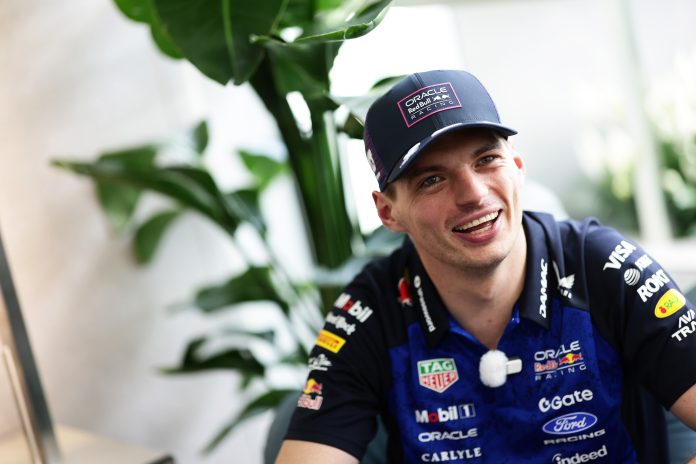
Max Verstappen and Red Bull showed clear signs of closing the gap to their Formula 1 rivals at the Miami Grand Prix, but the team remains a step behind Mercedes and Ferrari in the relentless fight for supremacy. Verstappen, recovering from a first-lap spin in the main race, salvaged a fifth-place finish after starting from the front row, signaling progress for the reigning world champion’s outfit. Meanwhile, Mercedes took the win, with Ferrari also firmly in contention, underscoring the tight competition among the top contenders.
Red Bull’s weekend was a mixed bag. Isack Hadjar’s qualifying woes culminated in exclusion due to illegal car floorboards, followed by an early crash on lap five of the grand prix. Verstappen, however, managed to secure fifth in both the sprint and the race, despite a spin that dropped him to ninth on the opening lap and a pit stop under an early safety car that pushed him down to 16th. From there, Verstappen executed a remarkable recovery, overtaking ten cars during a prolonged 51-lap stint on hard tires.
Team principal Laurent Mekies highlighted the tangible improvements at Miami, pointing to a leap forward in qualifying performance. “We left Japan 1.2 seconds away from pole, China 1.0 second away from pole,” Mekies said. “To see us this weekend qualifying six tenths away from pole on Friday and less than two tenths away on Saturday is a big indication of the size of the progress.” He emphasized that while the team’s race pace was not yet enough to challenge for first or second, it positioned Red Bull to battle for places three through five, a significant step compared to earlier in the season.
This weekend marked Red Bull’s closest approach to pole position since the Australian Grand Prix, where Hadjar’s deficit was 0.785 seconds. The Miami qualifying gaps confirmed Red Bull’s status as the top challenger behind Mercedes, narrowing the margin to just 0.166 seconds from pole, a stark improvement over previous rounds where gaps exceeded half a second or more.
The upgrade package introduced at Miami, including a revamped floor, engine cover, sidepod inlet, and revised front and rear wings, brought the gains Red Bull anticipated. Technical director Pierre Wache confirmed that the parts performed as expected, contributing to the team’s leap forward in pace.
Despite the progress, Mekies cautioned against complacency. “Don't get me wrong, we have not cracked everything we wanted,” he stated. “There is more we want to extract out of our package. And then we are conscious that the development race will be on and the competition will bring stuff in the next race.” Red Bull is already preparing further upgrades, including weight-saving measures planned around the Austrian Grand Prix in late June, aiming to keep pace with relentless rival development.
Verstappen’s drive from near the back after his spin and early pit stop demonstrated his skill and the underlying potential in the car, yet the 44-second gap to the winner at the flag highlighted the uphill battle still facing Red Bull. The team’s journey from being over a second off pole in recent races to a fraction of that margin in Miami signals a turning point, but the championship war remains fiercely contested with four teams tightly packed at the front.
The Miami Grand Prix served as a crucial litmus test for Red Bull’s upgrades and pace, confirming progress but also the need for continued development to challenge Mercedes and Ferrari consistently. As the season unfolds, Red Bull is clearly on the move, but the path to reclaiming dominance will require more breakthroughs and precision execution.