


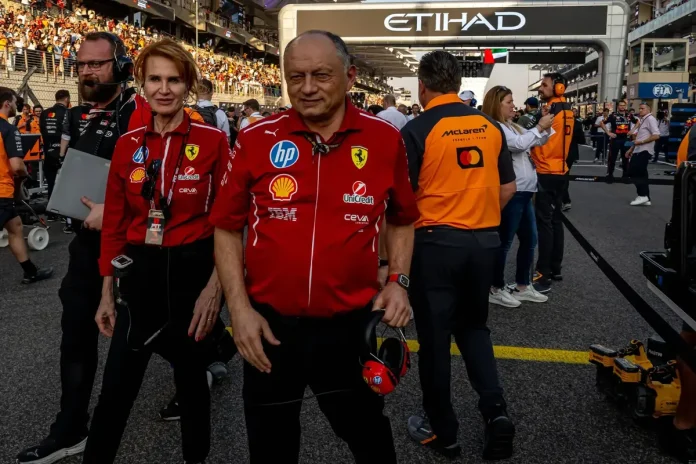
In a bold declaration that could ignite hope among Ferrari fans, team principal Fred Vasseur has assured the motorsport world that the troublesome issues that plagued the SF-25 will be “won’t be there next year.” However, he didn’t shy away from forewarning that the team may face a new set of challenges as the 2026 regulations loom on the horizon.
Ferrari’s 2025 campaign ended in disappointment, with the iconic Maranello squad finishing a dismal fourth in the Constructors’ Championship—their worst performance since 2020. The season finale in Abu Dhabi was a stark reminder of the team’s struggles, as Charles Leclerc and Lewis Hamilton crossed the line in fourth and eighth positions respectively, highlighting the car’s lack of competitiveness.
Throughout the 24-race season, the SF-25 proved to be a difficult machine to master. Hamilton, who made the switch to Ferrari at the start of the season, had a particularly tough time adapting to the car’s quirks. Leclerc, despite his ability to wring out slightly more performance, was equally vocal about the car’s deficiencies, especially when the weather turned wet, exposing the SF-25’s vulnerabilities.
The car’s most glaring issue was its inability to maintain an optimal performance window, compounded by excessive plank wear that forced the team to abandon their preferred ride height. This misalignment not only hampered their pace but also reared its head again at the Yas Marina Circuit during the season finale.
Vasseur, speaking to the media, expressed optimism about the future, saying, “I think the philosophy of the car next year will be completely different.” He emphasized that the aerodynamic characteristics would undergo significant changes, eliminating the issues that plagued the current season. “The issue that we have all this season won’t be there next year,” he stated confidently.
Yet, the Frenchman was quick to acknowledge the reality of the sport, admitting that new regulations could bring about unforeseen hurdles. “But we’ll have other issues for sure,” he remarked, hinting at the complex nature of Formula 1 racing where every change can lead to new challenges.
He pointed out the critical role of tires in the upcoming season, especially given the unique layouts of tracks such as Mexico and Austin. The fine margins of performance on out laps can translate to significant differences in qualifying times, underscoring the relentless pursuit of perfection in F1.
Adding to the somber narrative of Ferrari’s 2025 season was Leclerc’s struggle to pinpoint the cause of their lack of competitiveness. Following the Abu Dhabi race, he admitted to reporters, “No, I cannot explain it.” While he acknowledged that the team had started to grasp how to unlock more performance from the SF-25, it felt like an exercise in futility as the season came to a close.
The gap to McLaren, a staggering 435 points after 24 races, serves as a stark reminder of the challenges Ferrari faced, especially after a promising fight for the Constructors’ title the previous year. As Leclerc lamented, “But there’s not another race to prove it, and it’s the last race of the era anyways of this era of cars, so it doesn’t really matter anyway.”
With the dawn of a new era approaching, Ferrari fans are left to wonder if the Scuderia can rise from the ashes of a dismal season and reclaim their place as a dominant force in Formula 1. The anticipation for the 2026 season is palpable, but will the changes be enough to transform their fortunes? Only time will tell, as the team gears up to tackle new challenges head-on.