


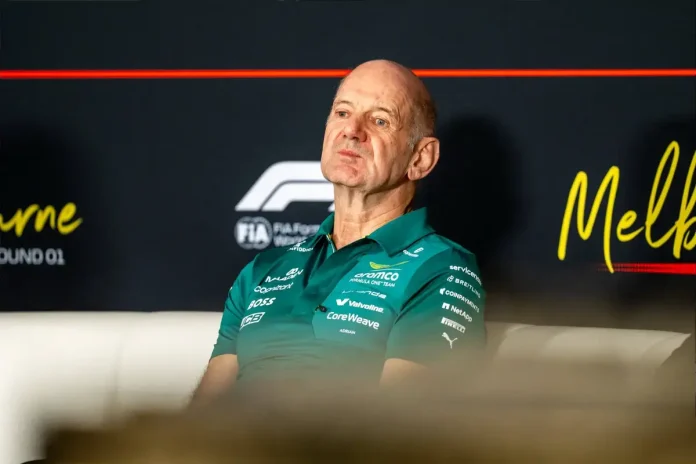
The 2023 Formula 1 season is proving to be a tumultuous start for Aston Martin, as the team’s chief engineer, Adrian Newey, laid bare the daunting challenges they face during a press conference in Melbourne. With the spotlight on the Honda-supplied power unit, the team is grappling with a slew of issues that threaten their competitive edge, including persistent vibrations, component limitations, and a critical lack of track mileage.
What makes this situation even more alarming is the revelation that Aston Martin only recognized the full extent of these issues late last year. Newey candidly discussed the hurdles they are encountering, stating, “We’re having ongoing issues with the battery and recently experienced another communication failure between the battery and the management system. But the more fundamental problem is the vibrations we are still battling.” This admission underscores the gravity of their predicament as they attempt to analyze whether any adjustments made to Lance Stroll’s car have yielded positive results.
The stakes are high, particularly given the limited battery supply. “We came to this race with four batteries. We faced conditioning or communication problems with two of them, leaving us with only two operational ones in the cars. With the damage rate we are experiencing, it’s a pretty scary place to be. If we lose one of those two batteries, it obviously becomes a major issue, so we have to be extremely careful in how we use them,” Newey explained, amplifying the urgency of their situation.
Newey also highlighted the ramifications of their limited track time, which hampers the team’s understanding of the car’s performance. “We’re doing very few laps, which means we’re also not learning much about the car. The information we have about the chassis is very limited because we’ve run so little and practically haven’t done laps with low fuel. Fuel acts as a cushion for the battery, and Honda has heavily restricted the number of laps we can do with less fuel. It turns into a self-feeding problem,” he lamented.
Frustration was palpable in Newey’s tone as he expressed feelings of helplessness regarding the significant issues plaguing the power unit. “I feel a bit powerless because we clearly have a very significant problem with the power unit. At the same time, we’re putting a lot of energy—human energy, not kilowatts—into working with Honda to try to find the best possible solution. We could say it’s not our problem, but in reality, it is, because the car is always a combination of chassis and power unit.”
As they grapple with these challenges, Newey revealed that Honda has made it a priority to tackle the vibration issues stemming from the power unit. “There’s a very clear action from Honda to try to reduce the vibrations coming from the power unit. They are working on it, but it won’t be a quick fix as it involves fundamental design and damping projects. I can’t say how long it will take, but that has to be the priority. Only after that can they truly focus on performance,” he explained.
The toll of this situation is being felt across the team, with Newey noting the intense pressure on their mechanics. “This problem is draining energy in all areas. Our mechanics have been working until four in the morning, and obviously, they are completely exhausted. The factory has been very supportive, and we really need to resolve this as quickly as possible.”
Reflecting on the team’s current state, Newey delved into the historical context of Honda’s return to F1. “It’s important to understand a bit of the history. Honda left at the end of 2021 and returned in a sense at the end of 2022. During that time away from competition, much of the original group dispersed, with many going on to work in other areas like solar panels or other projects. When they returned, we discovered that many of the original team members were no longer there.”
He pointed out the shocking realization that struck the team late last year. “We only really became aware of this in November, when Lawrence, Andy Cowell, and I went to Tokyo to discuss rumors that they wouldn’t meet their power objectives for the first race. It was in that meeting that we realized many of the original team members had not returned. Practically, they came back with perhaps 30% of the original team and already in an era of budget caps for engines, while their rivals had continued to develop without such limitations for some time.”
In conclusion, Aston Martin is facing one of the most challenging starts to a season in the paddock. Newey has made it clear that resolving the vibration issues plaguing Honda’s power unit is their utmost priority, and the daunting nature of the challenge looms large without a clear solution in sight. The lack of a specific timeline from Newey only adds to the anxiety surrounding the team’s future. Aston Martin’s late realization of working with a largely new team, when they expected to lean on the expertise that once produced a leading power unit, must feel like a gut punch. Meanwhile, Honda finds itself grappling with familiar issues reminiscent of its troubled past with McLaren, raising eyebrows about its current direction despite its undeniable technical prowess.