


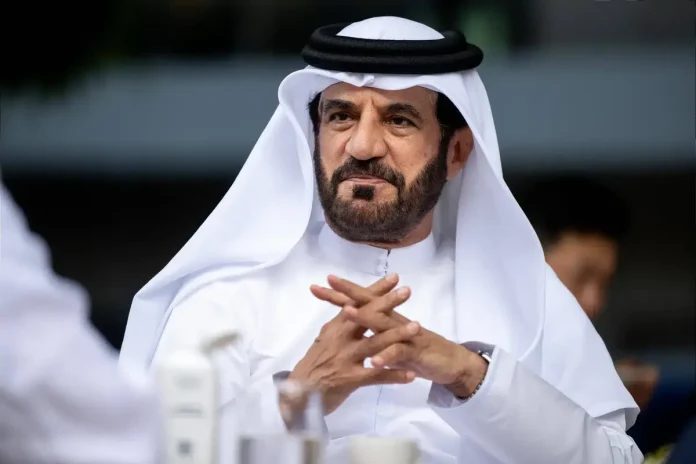
In a surprising turn of events, Mohammed Ben Sulayem has been re-elected as the president of the FIA, but not without a cloud of controversy hanging over his victory. Despite standing unopposed in the election, a notable 8.5 percent of the voting members chose not to endorse him, raising eyebrows across the motorsport community. This peculiar outcome unfolded on December 12 in Tashkent, Uzbekistan, where it was declared that Ben Sulayem would continue his leadership role for another term, presiding over the influential Federation Internationale de l’Automobile, the governing body for premier motorsport categories such as Formula 1, Formula 2, and the World Endurance Championship.
The backdrop to this election was riddled with complications as attempts by Laura Villars and Tim Mayer to challenge Ben Sulayem were thwarted by the stringent eligibility criteria imposed by the FIA. Villars, who had initially announced her candidacy, found herself unable to assemble the necessary list of seven vice-presidents required to run, a rule that inadvertently sidelined potential challengers. This requirement mandated that candidates must source vice-presidents from various global regions, including North America, South America, and Europe, amongst others. However, with Brazil’s Fabiana Ecclestone already on Ben Sulayem’s team, the door closed on other candidates from South America.
Mayer, who abandoned his campaign in October, voiced strong criticism of the FIA’s election process, accusing the organization of “lacking transparency” and perpetuating a façade of democratic choice. Villars escalated the situation by initiating legal action against the FIA, challenging the legitimacy of the election procedure. Her legal team sought an emergency ruling from a Paris court to halt the election, arguing that the process was fundamentally flawed. However, the court upheld the FIA’s decision, allowing the election to proceed as planned.
In response to the backlash, an FIA spokesperson emphasized their commitment to engaging with member clubs on critical issues related to both motorsport and automotive mobility, indicating that the organization remains focused on the future despite the turbulence surrounding the election.
As Ben Sulayem embarks on his second term, he will be joined by notable figures including Malcolm Wilson OBE, Tim Shearman, and Carmelo Sanz de Barros. The implications of this election, particularly the significant portion of members who abstained from voting, raise important questions about the state of governance within the FIA and the future direction of motorsport leadership. The drama is far from over, as Villars’ legal challenge continues, with a hearing scheduled for February 2026, ensuring that the controversy around this election will echo through the corridors of motorsport governance for years to come.