


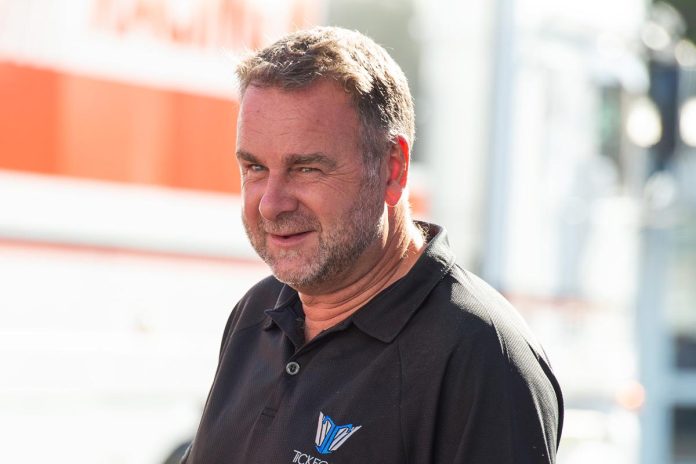
In a groundbreaking announcement that could reshape the landscape of Supercars racing, Tim Edwards has exuberantly declared, “we have parity” following extensive wind tunnel tests conducted in the United States. This revelation comes as the highly anticipated Toyota GR Supra gears up to join the Supercars grid in 2026, marking a significant moment for the competition.
The recent tests took place at Windshear, where a dedicated team of 30 representatives from Supercars, alongside homologation teams from Triple Eight, Team 18, and Walkinshaw TRG Racing, engaged in an intensive, multi-million dollar process over the span of 10 grueling days. Their collective efforts have resulted in a much-coveted aerodynamic balance among the Supra, Ford Mustang, and Chevrolet Camaro, a feat that has left many in the industry astounded.
Edwards couldn’t contain his excitement, stating, “We have parity.” His enthusiasm is echoed by the satisfaction of the three homologation teams involved, which he described as a “minor miracle” given the higher benchmarks set during previous tests. This time around, the focus expanded beyond just downforce and drag; a new sensitivity band was integrated into the testing, leading to this remarkable achievement.
“This is a fantastic result for the category,” Edwards emphasized, noting the significant strides made in aerodynamic equality. “We know we have aerodynamic parity, and to a much finer tolerance than what we had last time.”
Despite the promising outcome from the wind tunnel tests, the journey toward total parity has been a rollercoaster, particularly following the inaugural year of Gen3 racing in 2023. Supercars had previously visited Windshear in an attempt to align the Camaro and Mustang more closely, but the quest for parity has persisted as a hot topic for the upcoming seasons of 2024 and 2025. With the latest results, however, the conversation is set to evolve as the focus shifts towards engine testing slated for mid-2026.
“It is the first box ticked and next box is move onto the engine,” Edwards explained, hinting at the challenges that lie ahead. The tension during the testing phase was palpable, especially as team members often found themselves working for up to 18 hours a day. “You could imagine towards the end, everyone is a bit more on edge so to pull off what we did with everyone working so collaboratively is amazing,” he added, underscoring the spirit of teamwork that prevailed throughout the testing process.
As Supercars gears up for the future, the implications of achieving parity among these powerhouse vehicles cannot be overstated. With the wind tunnel tests yielding such promising results, fans and teams alike are left eagerly anticipating the next phase of development as they look forward to an electrifying and balanced competition ahead.