


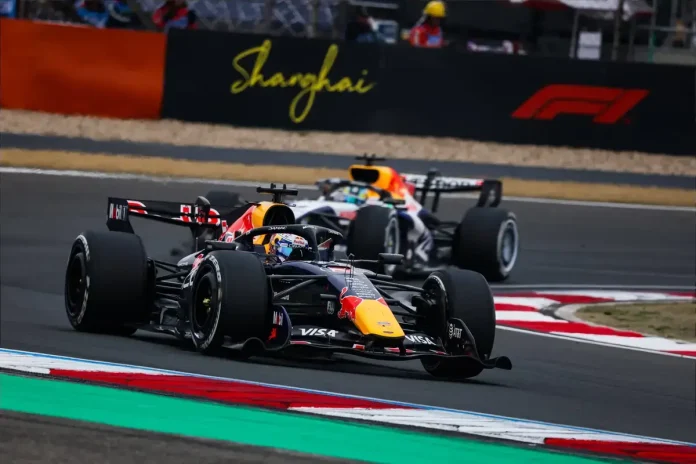
The cancellation of the Bahrain and Jeddah Grands Prix has sent shockwaves through the Formula 1 landscape, sparking concerns for Red Bull Racing as they face an unexpected five-week hiatus before returning to the track in Miami. This disruption, a direct consequence of the ongoing conflict in Iran, could prove to be a double-edged sword for the championship-leading team, which now finds itself at a critical juncture in the season.
After a disheartening performance at the Chinese Grand Prix, where both Max Verstappen and Isack Hadjar struggled against Alpine's Pierre Gasly, Red Bull’s competitive edge has come under scrutiny. The RB22's underwhelming performance led to a disappointing scoreless outing in the sprint race, followed by Verstappen’s retirement due to an ERS cooling issue. Hadjar managed to finish eighth, but the team’s inability to challenge established rivals like Mercedes and Ferrari raised serious questions about their current form.
Hadjar candidly stated, “For sure, we need more grip. It's just all about that. It's the most important bit so far.” His sentiments echo a growing frustration within the team, as they grapple with the implications of the April break. While the additional time could allow Red Bull to implement crucial upgrades, the reality is that competitors are also using this period to enhance their own performance. Hadjar noted, “Yes, and less points lost to everyone else, so for sure,” but added that the lack of racing is a setback for their new engine manufacturer, Red Bull Ford Powertrain. “The more racing the more we understand, the closer we get to the best engines on the grid,” he explained.
Max Verstappen, too, expressed his concerns, emphasizing the challenge of making significant gains during this downtime. “After Japan, of course you have a few extra weeks to put a bit more performance on the car, but at the same time others also put performance, right?” he remarked, underscoring the competitive nature of the sport where every team is fighting for supremacy.
In contrast, the break may offer a lifeline to teams struggling with their power units. Aston Martin, reeling from complications with their new Honda engine that has caused vibrations damaging batteries and raising health concerns for drivers, is taking a measured approach. Chief trackside officer Mike Krack acknowledged the mixed feelings surrounding the break, asserting, “There are two sides to it. Being on track, it allows you to discover new things. But not being on track, it helps you to solve problems without the intensity of the calendar.”
The Honda team’s recovery hinges on the Additional Development and Upgrade Opportunities (ADUO) mechanism, which evaluates power units after designated races. However, with two fewer rounds in the season's first half, the first evaluation now occurs after the Monaco Grand Prix, creating a more extended timeline for potential improvements.
Meanwhile, teams like Williams have embraced the April break, viewing it as an essential time to regroup and strategize. With only two points scored this season and a car that has faced challenges on multiple fronts, team principal James Vowles is focused on leveraging this downtime for development. “Clearly, we haven't started the season where we wanted to,” he admitted. “So that period for us is about taking stock of what we actually really can change.”
Vowles emphasized the necessity of addressing the car’s weight issues and optimizing future performance. The team plans to maximize this time by utilizing their simulator and conducting pitstop practices, aiming to emerge from the break with renewed vigor.
Even new entrants to the sport are seizing the moment. Cadillac, which is still ironing out issues with its car, sees the break as an opportunity for crucial upgrades. Valtteri Bottas remarked, “I think it's actually quite beneficial for us. We have more time to sort things out,” highlighting the need for improvement as teams prepare for the Miami Grand Prix.
As the F1 community anticipates the return to racing, the implications of this break weigh heavily on teams, particularly Red Bull. The upcoming weeks will not only test their resilience but also their ability to adapt and innovate as they strive to maintain their position at the top of the championship standings. The race in Miami promises to be a pivotal moment for all teams, setting the stage for an intensely competitive season ahead.