


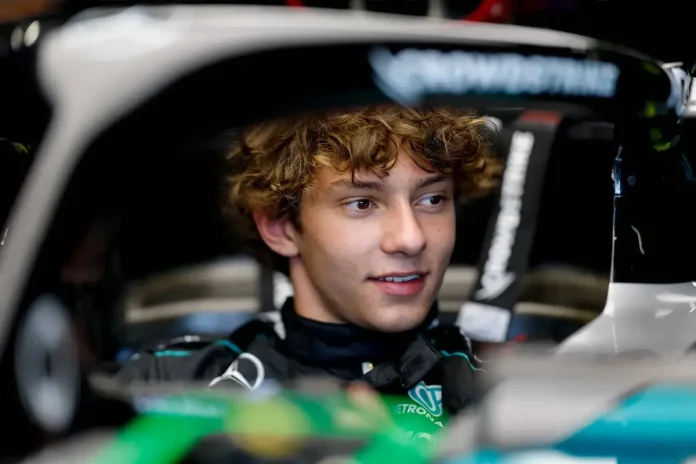
Kimi Antonelli, the rising star of Formula 1, has opened up about the intense demands of his inaugural season, highlighting energy management as his greatest hurdle. Transitioning from the relatively manageable pace of Formula 2, Antonelli discovered that the relentless schedule of F1 was a game-changer.
Despite the challenges, the 19-year-old Italian made a significant impact, securing three podium finishes and landing seventh in the fiercely competitive Drivers’ Championship. However, his journey was far from smooth. After a promising start, he faced a series of setbacks during the European leg of the season, including four retirements and a meager three points. This rocky stretch made it imperative for Antonelli to finish strong, and he rose to the occasion.
In a remarkable display of resilience, Antonelli achieved his best result since the Canadian Grand Prix in June during the Baku race in September. He built momentum with consecutive podiums in Brazil and Las Vegas, although his season concluded with a 15th-place finish in Abu Dhabi.
Reflecting on his tumultuous season, Antonelli candidly admitted, “The biggest surprise, definitely the commitments that you have during weekends, but also outside race weekends. I think this has been one of the biggest factors and one of the biggest learnings as well — trying to manage the energy the best way possible.” He elaborated on the fatigue that accompanied the grueling schedule, expressing that there were moments when he felt utterly drained. Yet, with the experience gained, he feels more prepared for the upcoming season, stating, “Now obviously I know what to expect much better, and I think also next year is going to be a bit easier.”
On a more positive note, Antonelli couldn’t hide his enthusiasm for the F1 machinery itself. He described the cars as “amazing” to drive, noting their incredible speed and the thrilling experience they offer, especially during qualifying sessions. “The limit is so high that it’s fun to go out there and try to discover how much you can push the car,” he said. He acknowledged that some circuits he found less exciting in F2 became exhilarating in an F1 car, emphasizing the unique thrill of driving the fastest cars in the world.
Adding to the conversation, his Prema teammate Oliver Bearman, who also made the leap to F1 this season, echoed Antonelli’s sentiments about the demanding nature of the sport. Bearman, who showcased his potential during his rookie year, remarked, “Biggest surprise or biggest difference, I would say, is probably how busy you are compared to F2.” He pointed out that F1’s calendar nearly doubles the number of races, coupled with an avalanche of media and partnership commitments that leave little room for downtime. “So, your energy level—it’s one thing driving the car, but the other thing is arriving at the track always 100% ready to go,” he concluded.
As both Antonelli and Bearman navigate their way through the exhilarating yet demanding world of Formula 1, their experiences serve as a testament to the challenges and excitement that come with racing at the highest level. With the lessons learned this season, they are poised to tackle the next chapter of their careers with renewed vigor and determination.