


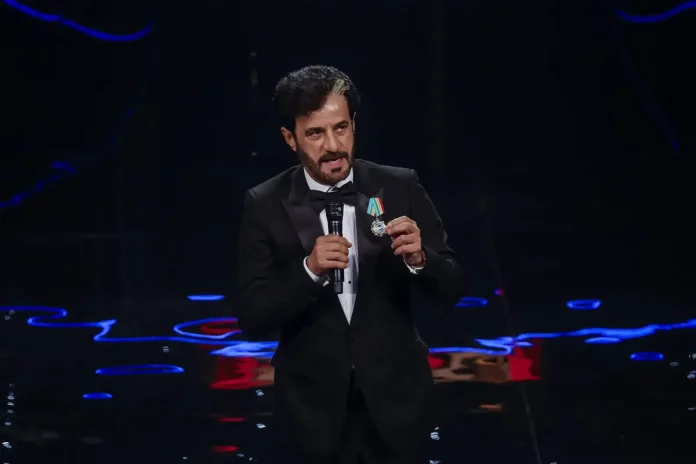
Mohammed Ben Sulayem has secured his position as the President of the FIA, but this victory, celebrated in the heart of Tashkent, Uzbekistan, is anything but tranquil. Re-elected without formal opposition, the Emirati leader finds himself entangled in a whirlwind of controversy, facing allegations that he has effectively stifled the democratic process that should underpin such an election.
While Ben Sulayem may have retained his role, the lack of competitors has not quelled the growing dissent within the motorsport community. Former candidate Laura Villars, a vocal critic of the existing FIA framework, has escalated her grievances to the French courts. She argues that the electoral process was fundamentally flawed, claiming it discouraged or outright prevented credible alternatives from emerging. A pivotal court hearing is set for February 16, a date that could cast a long shadow over the legitimacy of Ben Sulayem’s presidency.
In the face of these accusations, Ben Sulayem has not hesitated to defend his position. In an interview with AFP, he passionately articulated his perspective on the electoral process, shifting the blame onto absent candidates. “I don’t understand why these other candidates did not go to Latin America to promote their programs. You must go to the people, earn their trust and support for your candidacy. That’s democracy, for heaven’s sake!” His comments also addressed the contentious issue of regional vice-presidential positions, particularly in Latin America, where only one candidate, Fabiana Flosi—the wife of former F1 chief Bernie Ecclestone and a known supporter of Ben Sulayem—was validated.
Ben Sulayem staunchly denies any manipulation of the election process, asserting that the existing rules remained unchanged and were simply adhered to.
Though he faced no direct competition, Ben Sulayem refuses to acknowledge any decline in his popularity. On the contrary, he claims his legitimacy has been forged in adversity. “I don’t believe I am unpopular. I wouldn’t have gotten this far if I hadn’t confronted all these challenges and attacks. They have targeted me day and night, but what do I care? I have ignored them and focused on delivering on my promises.”
At 64 years old, Ben Sulayem embarks on a new term that will extend to December 31, 2029. With a renewed sense of purpose, he is determined to continue what he considers a vital transformation of a previously faltering institution. Reflecting on his first four years at the helm, he paints a picture of an organization he believes has undergone significant change. “I’m eager to get to work for the next four years. Cleaning house has not been easy, and placing the right people in the right positions within the FIA has been a challenge. But I can confidently say that the investments made during my first term are paying off. If you asked me what I would change if I could go back, my answer would be ‘nothing.’”
This bold stance is further emphasized by his assertion that prior to his presidency, the FIA lacked accountability. While Ben Sulayem’s re-election may appear secure, the political landscape is far from stable. Ongoing legal proceedings in France, internal critiques, and lingering discontent surrounding FIA governance indicate a fractured atmosphere.
As the world of motorsport enters a critical juncture, the governance question looms as large as the competition itself. The FIA is under unprecedented scrutiny, with every decision made by its president likely to be examined, challenged, and debated. Ben Sulayem claims to move forward without regret, but in an arena where legitimacy is not solely derived from the ballot box, the true test may only just be beginning.