


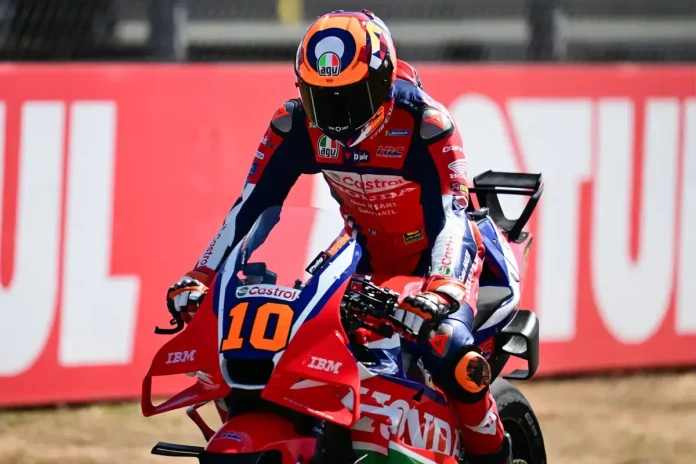
Luca Marini's disappointing 14th-place finish at the recent MotoGP race in Austria speaks volumes about the unseen struggles that riders face on the track, particularly with tire performance and management. While the headlines often focus on podium finishes and overtakes, Marini’s experience reveals the critical, yet often overlooked factors that can derail a promising weekend.
The emotional weight of Marini’s race extends beyond the numbers. Starting with optimism after a strong practice session, he faced an uphill battle when tire temperature issues plagued his performance. The disappointment was palpable as he grappled with a motorcycle that failed to respond, leaving him feeling isolated on the track. “I tried everything, but nothing worked,” he lamented, highlighting the frustration that many riders feel when they push their limits but are ultimately let down by their machines.
Chronologically, the weekend began with promise. Marini showcased competitive speed during practice, but as the temperatures rose, his rear tire suffered significantly more than his competitors’. This change marked a turning point; what began as a potential top-ten finish quickly spiraled into a chaotic race characterized by contact with other riders and a desperate attempt to salvage points. His strategy to manage tire degradation, despite the chaos around him, was a testament to his racing acumen, yet it wasn’t enough to counter the technical shortcomings he faced.
The implications of Marini's struggles are critical within the broader context of the championship. As tire performance increasingly influences race outcomes, teams must adapt their strategies and technology to meet these challenges. Marini’s difficulties also expose a potential gap in Honda’s development, especially as they navigate the complexities of specialized tire compounds. The questions raised about their performance reflect a larger narrative of competitiveness within the MotoGP paddock.
From a human perspective, the pressure on riders like Marini is immense. Not only do they contend with the physical demands of racing at high speeds, but they also bear the weight of expectations from their teams, sponsors, and fans. Marini's recognition of the rising pressure as he navigated the race underscores the emotional rollercoaster that defines a rider's career. The stakes are high, and the difference between success and failure can be as thin as a tire's grip on the asphalt.
In conclusion, Luca Marini’s experience in Austria serves as a poignant reminder that the story of a race is not just about the leaders crossing the finish line, but also about the battles fought in the middle of the pack. His tire troubles and the resulting performance highlight the intricate relationship between rider, machine, and the ever-changing conditions of the track. As the MotoGP season progresses, these narratives will continue to shape not only the championship standings but also the personal journeys of the riders involved.