


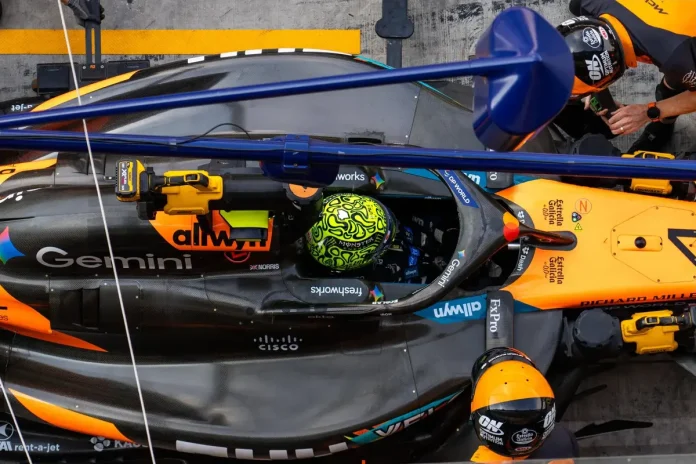
The roar of McLaren’s engines is once again a dominant sound in the world of Formula 1, and a significant part of this resurgence can be credited to an exceptionally robust and daring technical team. Under the leadership of Lando Norris, who has brought home the coveted World Drivers’ Championship title for McLaren after a long 15-year drought since 2008, the team has proven that a solid technical foundation is crucial for success. The MCL39 car, hailed as the best machine of the last year of ground effect regulations, is a testament to this revival.
But don’t think for a moment that McLaren has taken its foot off the gas. After clinching the Constructors’ Championship in 2024, the team embarked on a bold new project, implementing radical changes that initially raised eyebrows. This audacious move reflects a broader culture of innovation and courage within the technical department, positioning McLaren optimistically for the challenges posed by the next set of regulations.
The journey to the World Championship title has been a long and arduous one, rooted in years of restructuring and reorganization. Team Principal Andrea Stella paints a vivid picture of this transformation, stating, “It’s a path that dates back to before the changes that occurred in 2022, which initiated a new course coinciding with my role as Team Principal.” Stella and CEO Zak Brown have meticulously reorganized their technical resources, which already boasted a high level of expertise.
A key player in this revitalization is Peter Prodromou, who has been entrusted with overseeing all aerodynamic aspects due to his unparalleled skills. The team has also bolstered its ranks by luring top talent from competitors, most notably Rob Marshall, the mastermind behind the concepts of Adrian Newey at Red Bull. Marshall’s influence has not only enriched McLaren’s technical capabilities but has also fostered a culture of bravery essential for innovation. Stella emphasizes, “We’ve added some high-caliber individuals like Rob Marshall who have contributed not just technically but also in terms of courage.”
While McLaren could have easily opted for a conservative approach by simply enhancing the previous year’s championship-winning car, the team chose to break new ground with the MCL39. This decision was driven by the desire to stay ahead of rivals rather than risk being caught flat-footed. Stella recalls, “I always tell Rob and the other technical leads like Mark Ingham and Neil Houldey that they didn’t let me have a peaceful Christmas, knowing a championship-winning car was being so radically transformed in certain areas.”
In 2025, the steering system was redesigned to advance the steering arm and align it with the lower suspension triangle, achieving a better balance between aerodynamics, vehicle dynamics, and weight distribution. This shift led to some challenges for Norris, particularly in his perception of the front wheels during braking. However, these issues were more than compensated for by the impressive gains in lap times. The extent of the changes caused Stella considerable anxiety leading up to the car’s track debut, but relief soon followed: “I must say the car rewarded us, and the technical material ultimately allowed Oscar and Lando to win seven races each and contend for the World Championship until the final race.”
Looking ahead, McLaren’s technical team stands on a foundation of creativity and boldness, fostering a work culture that encourages risk-taking without the fear of repercussions for mistakes. This strength instills confidence in Stella as the team prepares for the upcoming regulations: “The technical team is particularly strong. We benefit from the contributions of Peter Prodromou, Rob Marshall, Neil Houldey, Mark Ingham, Giuseppe Pesce, Mark Temple… From this perspective, it’s one of the strongest technical departments I’ve ever been part of in my 26 years in Formula 1. Even if the specifics of these regulations may not be directly applicable in the future, the way we work, our standards, our approach to development, and our technical objectives will endure. This makes us optimistic as we look towards the 2026 season.”
As the engines roar to life once more, McLaren is not just chasing the past; they are boldly paving the way for the future.