


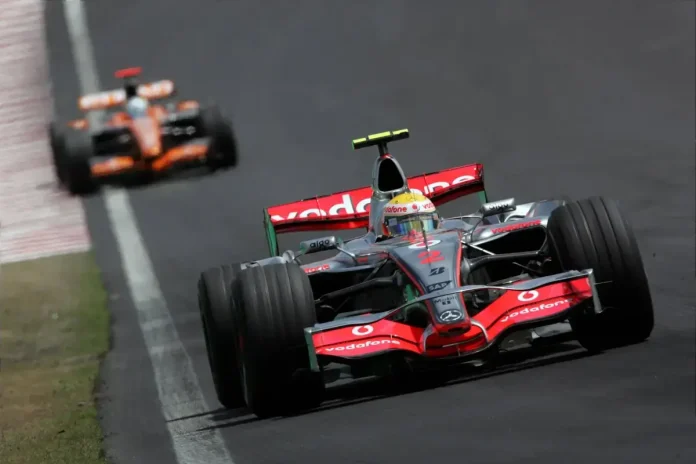
In the high-stakes world of Formula 1, where every millisecond counts and secrets can make or break a season, the 2007 Spygate scandal stands as the darkest chapter in the sport’s history. What started as routine espionage—an accepted yet unspoken part of Formula 1’s cutthroat competition—spiraled into a full-blown scandal that shook McLaren, Ferrari, and the entire F1 paddock to its core.
Each race weekend, teams deploy covert photographers to capture every detail of their rivals’ cars, feeding vital technical insights back to their engineers. This covert intelligence gathering is accepted, as long as teams don’t cross the invisible line into outright theft. But in 2007, that line was obliterated. McLaren’s internal turmoil, sparked by the unexpected rise of rookie sensation Lewis Hamilton challenging team leader Fernando Alonso, was about to be eclipsed by an explosive revelation that would redefine the sport’s integrity.
On the eve of the British Grand Prix, McLaren dropped a bombshell: a senior figure within the team was under investigation for receiving confidential technical data from Ferrari. The paddock buzzed with speculation. The Ferrari insider implicated was Nigel Stepney, a veteran engineer whose career had spanned decades and who had played a pivotal role in Ferrari’s dominance during Michael Schumacher’s era. Disgruntled by internal reshuffles and a souring relationship with Ferrari’s management, Stepney’s defection was no surprise—but the gravity of what he was involved in stunned everyone.
Stepney’s name became synonymous with sabotage when Ferrari accused him of tampering with a car’s fuel system just months earlier—a charge many found hard to believe given its crude nature. But the real shocker came when McLaren’s chief designer, Mike Coughlan, was linked to the scandal. Coughlan had a long history with Stepney from their Benetton days, and private investigators were soon knocking on his Surrey doorstep, tipped off by an unsuspecting local photocopy shop that had been asked to digitize a staggering 780-page Ferrari technical manual.
This mountain of stolen material contained everything from wind tunnel data and test reports to detailed drawings of Ferrari’s 2007 car and even budget breakdowns. The ensuing investigation, dubbed “Spygate,” sent shockwaves through F1, threatening to tear McLaren apart and tarnish the sport’s reputation forever.
Despite the overwhelming evidence of possession, the FIA’s World Motor Sport Council initially hesitated to fully condemn McLaren, unable to prove the team had directly used Ferrari’s secrets to gain an advantage. But the scandal deepened when internal strife within McLaren exploded publicly at the Hungarian Grand Prix. Alonso and Hamilton’s rivalry boiled over, with Alonso accusing Hamilton of breaking team orders and retaliating by deliberately slowing him down on track. Alonso’s threat to expose internal emails revealed the chilling extent of the espionage, showing that he and McLaren’s test driver Pedro de la Rosa had been privy to Stepney’s stolen Ferrari data.
With this irrefutable evidence laid bare, the FIA convened again and delivered a historic verdict: McLaren was cleared of directly using the Ferrari information on their car, the MP4-22, but guilty of possessing it and gaining a “significant sporting advantage.” The penalty was unprecedented—a staggering $100 million fine and disqualification from the Constructors’ Championship, the heaviest sanction ever in F1 history.
The scandal’s fallout was immense. Alonso and Hamilton’s championship battle was forever tainted, with Ferrari’s Kimi Räikkönen swooping in to snatch the title by a single point in a season marred by infighting and controversy. FIA president Max Mosley later admitted McLaren escaped relatively lightly, sparing the drivers from losing their points to preserve the championship’s integrity. Yet Spygate remains a glaring example of deception in one of the world’s most elite sports.
This scandal didn’t just expose technical theft—it unveiled the raw human drama beneath the glitz and glamour of Formula 1. Rivalries, betrayals, and the ruthless pursuit of victory collided in a story that continues to resonate as a cautionary tale of how far teams will go—and how devastating the fallout can be—when the race for supremacy crosses the line from cunning to criminal. Spygate is not just a scandal; it is a stark reminder that in Formula 1, the battle is fought as much off the track as on it.