


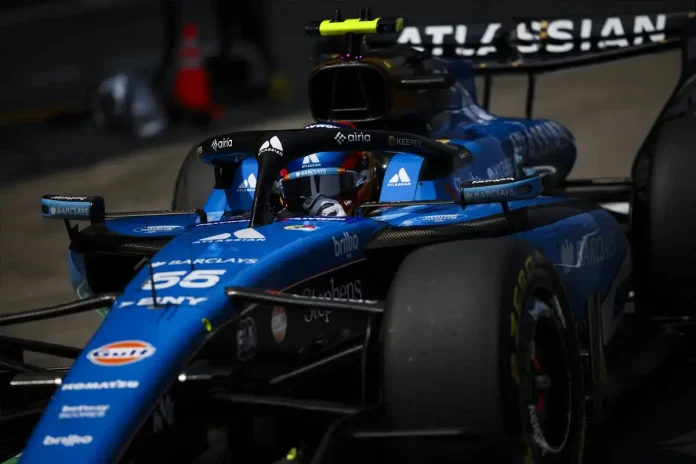
Carlos Sainz faced a shocking revelation on the opening day of track action ahead of the highly anticipated Japanese Grand Prix. Despite the palpable excitement surrounding Williams’ significant advancements, the Spaniard found himself languishing in 13th place on the timesheets, just shy of two-tenths behind Audi’s Nico Hülkenberg, who secured seventh. This disparity highlights the ongoing challenges faced by Sainz and his team as they navigate the complexities of race performance.
However, it was a day filled with mixed emotions. Williams, the underdog of the paddock, showcased a promising leap forward in their one-lap pace, with Alex Albon breaking into the top 10. This development breathed new life into the Grove-based squad, igniting hopes for a better showing in qualifying. Yet, the joy was short-lived for Sainz, as he grappled with a stark reality when transitioning to high-fuel runs. The drop in performance was so alarming that it left him questioning whether it was even worse than his experience in the previous round in Shanghai.
“We’re trying things, and definitely today it seemed like, at least on low fuel and short runs, we were able to mix it up in the midfield,” Sainz stated, reflecting on the day's trials. His optimism was palpable, but the harsh truth was undeniable. “Unfortunately, when we moved to high fuel, it was a bit of a shock how much of a step backwards we took.” This stark contrast between the performance on low fuel and the disappointing results on high fuel has prompted Sainz to call for an urgent team analysis. He emphasized the need to uncover the reasons behind this significant performance gap, questioning why they were more competitive on low fuel this weekend while struggling to maintain that level on high fuel.
Sainz’s reflections on the day encapsulated both the highs and lows of Formula 1 racing. While he acknowledged the positive aspects of competing in the midfield during low-fuel runs, the need for critical analysis looms large. “So there are some good and bad aspects. Maybe a bit more good than bad. In the end, it’s a good sign that we could at least mix it up on low fuel,” he concluded. As the team prepares for the next challenge, all eyes will be on whether they can bridge the gap between their promising pace and the disheartening performance drop, particularly as they look to make their mark on the demanding circuit in Japan.