


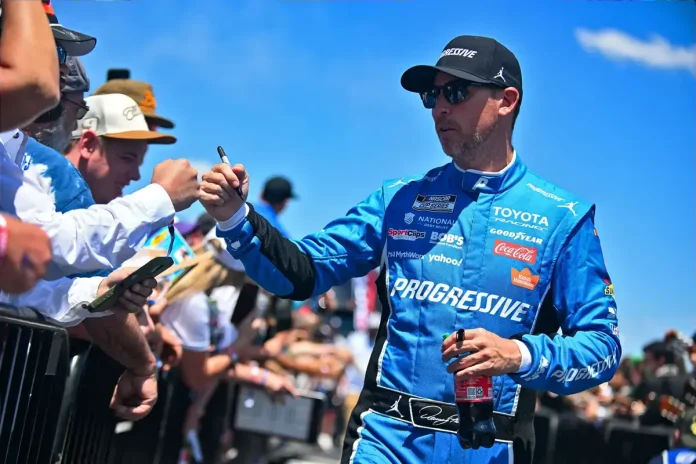
Denny Hamlin has publicly slammed NASCAR’s appeal process as “not a fair fight” following the hefty penalty handed to Ryan Preece after his clash with Ty Gibbs at Texas Motor Speedway. Preece, driving for RFK Racing, was slapped with a $50,000 fine and docked 25 championship points for allegedly intentionally wrecking Gibbs. The penalty triggered an immediate appeal from RFK Racing, setting the stage for a contentious showdown over NASCAR’s disciplinary methods.
Hamlin, a seasoned competitor, voiced sharp criticism on his Actions Detrimental podcast, spotlighting what he sees as an uneven playing field in NASCAR’s appeals system. He argued that the sanction against Preece relied heavily on in-car radio audio and SMT data—a form of telemetry—that NASCAR suddenly treats as credible evidence despite previously dismissing it. “I thought they got most everything wrong on their calls,” Hamlin said. “People think you have the appeals and stuff. It’s not a fair fight guys. It’s not broadcasted for a reason. I think he has a legit shot of getting it overturned based off of facts and evidence.”
The controversy centers on NASCAR’s use of Preece’s radio communications, which Mike Forde, NASCAR’s managing director of racing communication, defended on the Hauler Talk podcast. Forde explained the penalty stemmed from the radio transmissions indicating premeditated intent to wreck Gibbs. This evidence was pivotal in NASCAR’s decision, but Hamlin highlighted a glaring flaw in the appeal hearings: teams have no opportunity to rebut NASCAR’s narrative. “And like you can’t rebut anything. So they can just say, just on their side, when they start giving their explanation to this independent panel, there is no, I object. You can’t say that. You just have to sit there and let them say whatever they want to say,” Hamlin said. “The process is not a fair fight for the ones that are appealing.”
While RFK’s formal appeal date remains unannounced, the dispute has drawn attention from other NASCAR figures. Dale Earnhardt Jr., a Hall of Famer and respected voice in the sport, weighed in with a more pessimistic outlook. He suggested the chances of overturning the penalty are slim but indicated that any reduction in points would still represent a win for RFK Racing.
This penalty and ensuing appeal carry significant weight for the championship hunt, with 25 points a valuable commodity as the season progresses. Hamlin’s call for a more transparent and equitable appeal process adds pressure on NASCAR to revisit how it handles disciplinary actions moving forward. The spotlight now turns to whether RFK Racing can successfully challenge the ruling or if NASCAR’s controversial procedure will stand, reinforcing the governing body’s authority as the final arbiter in on-track disputes.