


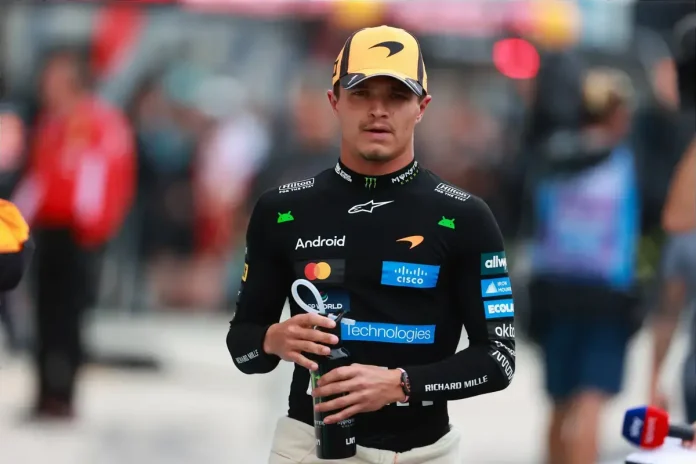
Lando Norris laid bare the harsh reality behind Formula 1’s rulemaking: drivers have limited influence because “it’s a business.” Speaking ahead of the Miami Grand Prix, the McLaren star condemned the current 50:50 power split between internal combustion engines and electric deployment as fundamentally flawed. The hybrid formula, pushed hard by manufacturers in 2022, has sparked widespread frustration among drivers and fans alike, who see the artificial electrical boosts skewing pure racing skill.
Despite six drivers, including Charles Leclerc and seven-time champion Lewis Hamilton, being consulted on recent tweaks to the electrical harvesting rules, Norris described the process as too little, too late. “We just have to give our input, honestly,” he said, emphasizing that the priority should be flat-out racing—“not by implementing batteries and wings that do all of this stuff we’re doing now.” Norris pointed to better solutions like lighter cars and improved tyres to allow closer racing, rather than complex tech gimmicks that produce “unearned passing moves.”
The current hybrid rules, introduced under pressure from manufacturers aligning with the automotive industry’s electrification path, have led to inconsistent racing and start-line chaos. FIA and F1 CEO Stefano Domenicali have acknowledged the issues diplomatically but maintain the direction must balance technological progress with spectacle. Next season’s shift to a 60:40 split favoring combustion engines is seen as a patch rather than a fix, with longer-term debates underway. FIA president Mohammed Ben Sulayem is pushing for a return to naturally aspirated V8 engines paired with a smaller electric component—a proposal that divides manufacturers, with Honda and Audi resisting, while US-based Ford and Cadillac are more receptive.
Looking ahead to the post-2030 engine formula, Norris urged a more measured approach, warning against the current model’s “beta” rollout. “It’s a business at the end of the day, so you have to balance the business side, which is obviously where we don’t have a lot of say,” he admitted. But he also praised the FIA’s efforts to improve the situation and expressed hope that future regulations will better reflect what drivers and fans want: genuine, skill-based racing rather than artificial advantages dictated by battery charge.
As F1 wrestles with electrification and entertainment, Norris’s candid assessment highlights the tension between commercial interests and racing purity—one that will shape the sport’s direction for years to come.