


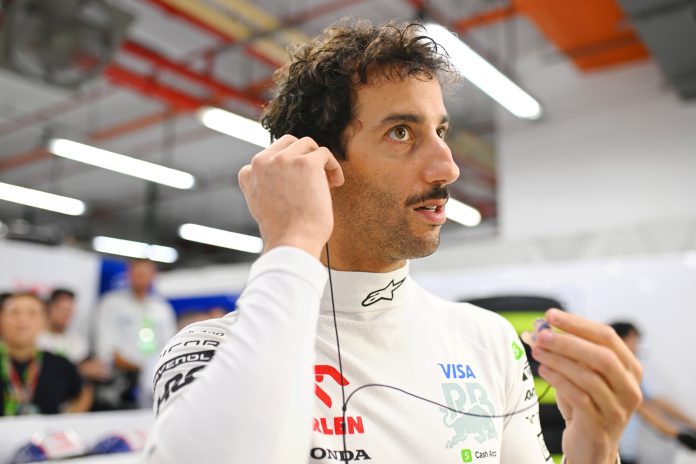
Daniel Ricciardo’s turbulent farewell to Formula 1 paints a vivid picture of a champion forced to confront the harsh reality of decline in one of the world’s most brutal sports. Once a dazzling talent electrifying the grid with his trademark grin and fearless overtakes, the Australian star’s final years in F1 have been marked by relentless struggle, painful setbacks, and an emotional toll that few outside the paddock fully grasp.
After a promising start to his career, Ricciardo’s journey took a sharp downward turn during his stint with McLaren in 2022. What was meant to be a new chapter quickly spiraled into a nightmare of underperformance and mounting pressure, culminating in a shock dismissal. The 36-year-old driver faced the gut-wrenching question every athlete dreads: when is it time to walk away? Stripped of his seat and facing an uncertain future, Ricciardo wrestled with whether to call it quits altogether.
His resilience shone through when he seized an unexpected lifeline mid-2023 with AlphaTauri, a Red Bull sister team. Yet fate dealt a cruel blow. A seemingly minor accident fractured his hand, sidelining him for nearly ten weeks and forcing yet another painful pause in his career. That injury sparked a moment of deep reflection. Was this a cosmic sign to bow out gracefully while still respected? Or was there unfinished business left on the table?
Ricciardo chose to fight on, determined to prove he still had the fire. But the harsh reality of Formula 1’s unforgiving nature caught up once again. Another exit followed, leaving the Australian grappling with the bitter truth that his peak performance days were behind him. “I had been dismissed twice in two years,” Ricciardo admitted in a candid interview with Jim Farley. “I gave so much of myself and felt completely drained. Looking back, I’m grateful someone else made the decision for me.”
What makes Ricciardo’s story so compelling is his brutal honesty about the physical and emotional costs of holding on too long. He openly acknowledges the inevitable decline, contrasting himself with veterans like Fernando Alonso, who continue to defy age and compete fiercely into their 40s. “I think I already knew it was the end because it was becoming harder to perform at the level I used to. Drivers like Alonso remain in F1 at over 40 competing at the highest level. For some reason, I lost a bit of that, and it’s normal to admit that.”
Ricciardo’s saga is a stark reminder that even the brightest stars must eventually face the sun’s setting. His journey through injury, rejection, and self-doubt reveals the brutal underbelly of elite motorsport, where talent alone isn’t enough to guarantee longevity. Yet, in his acceptance and resilience, Ricciardo leaves a legacy not just of spectacular overtakes and infectious charisma, but of courage in the face of inevitable change. His story resonates deeply with anyone who has ever grappled with the difficult question of knowing when to let go—and finding freedom in that release.