


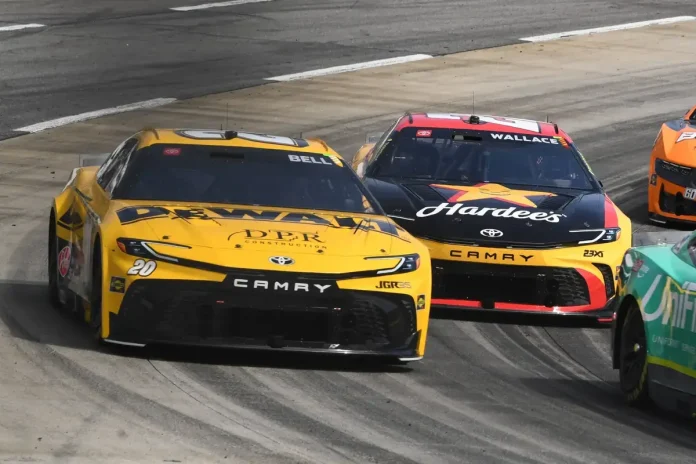
Bristol Motor Speedway has become synonymous with tire troubles that have turned thrilling races into chaotic tire management battles, overshadowing pure driving skill. The 2024 March race, won by Denny Hamlin, was a glaring example of how critical tire strategy is at this high-intensity track. But Christopher Bell, the most recent victor at Bristol, has boldly called out the sport’s obsession with tire survival, declaring that luck and timing often eclipse genuine driver talent.
Bell’s dramatic victory in last season’s Bristol playoff race was a masterpiece of grit and skill. Charging from fifth place with just four laps remaining, Bell seized the lead despite intense pressure from Brad Keselowski in the final corner. Yet Bell insists that it wasn’t just driver skill that clinched the win. “It’s just a matter of when the yellow flags fall and how long the tires last on your car,” Bell said. He argues that all drivers are equally adept at managing their cars and tires, making it “impossible to see driver technique or differences that are going to save the tires.” According to Bell, it boils down to timing and a bit of luck — when cautions come and which cars’ tires happen to hold up better — rather than pure talent behind the wheel.
This raw and candid assessment has sparked debate in racing circles. Fellow driver William Byron pointed out another variable that complicates tire performance: weather. Byron noted that when temperatures hover above 65 degrees, Bristol racing follows a more predictable pattern with gradual tire wear. But when temperatures dip below 60 degrees, tires tend to shred rapidly, throwing an additional curveball at drivers and teams alike.
The tire saga at Bristol has dominated conversations because tires often dictate the final outcome more than driver ability or strategy. Recognizing this, Goodyear is stepping up with a game-changing solution for this weekend’s Bristol race. Justin Fantozzi, Goodyear’s Director of Racing for the Americas, revealed that the tire manufacturer has developed a new rubber compound designed to be less sensitive to temperature fluctuations. Tested in chilly conditions last November, this new formula aims to ensure consistent tire performance whether it’s a cold spring race or a brisk fall night event. “We wanted to take some of that temperature sensitivity out,” Fantozzi explained, emphasizing the goal of putting reliable rubber on the track regardless of weather.
Bristol’s reputation as one of the most electrifying races on the NASCAR calendar remains intact, with its rapid shifts in momentum and nail-biting finishes. Christopher Bell’s win last season perfectly encapsulated the unpredictable excitement that fans crave. After a brief break, drivers will return to Bristol eager to showcase their skills without the looming uncertainty of tire failures dictating the race’s fate.
With Goodyear’s innovative tire formula hitting the track, this weekend’s Bristol race promises to shift the focus back to raw racing prowess and strategy rather than tire survival. For fans and drivers alike, this could turn Bristol back into the high-octane battleground it’s meant to be—where driver talent shines brightest and the chaos of tire luck is finally tamed.