


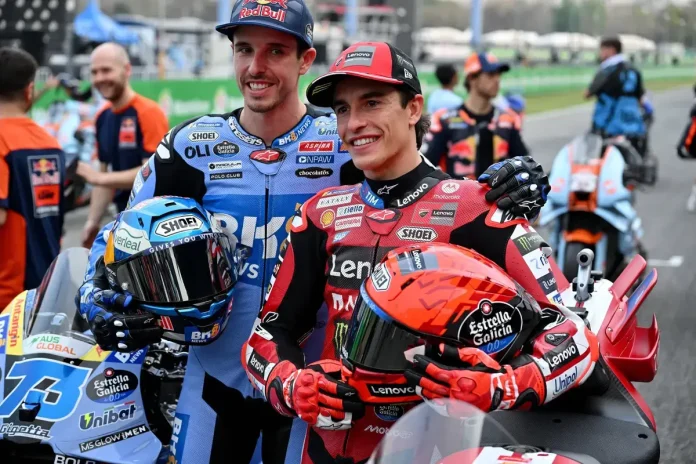
In an unprecedented move that has sent shockwaves through the MotoGP community, Marc Marquez, a legendary figure in the racing world, has boldly addressed the ongoing geopolitical tensions affecting the sport. Speaking out in a paddock typically characterized by cautious silence on such issues, Marquez has emerged as the first MotoGP rider to publicly acknowledge the tumultuous situation in the Middle East, a conflict that has significantly disrupted the racing calendar.
Currently competing in Brazil for the second round of the 2026 season, Marquez did not shy away when questioned about the upheaval in the schedule, stating, “The most important thing is the cessation of conflicts to ensure peace and security in these regions.” This statement, though measured, carries profound implications, starkly contrasting with the usual reticence found in the paddock regarding global affairs.
The sporting arena finds itself unable to ignore the harsh realities unfolding outside the racetrack. The conflict that erupted in late February has had immediate ramifications for several major championships. MotoGP has been directly impacted, with the cancellation of the Qatar Grand Prix at Losail, originally set for April 12. This event has been rescheduled to November 8, triggering a domino effect that has altered the entire racing calendar, pushing back the Grands Prix in Portugal and Valencia, and extending the season to November 29. The repercussions have not spared Formula 1 either, with races in Bahrain and Saudi Arabia being called off, alongside the endurance championship, which also had to forfeit its opening event in Qatar.
In the midst of this turmoil, the return of MotoGP to Brazil after more than two decades is like a breath of fresh air. Marquez expressed his excitement, saying, “The return of MotoGP to Brazil after so many years is excellent news for the championship and all the fans. The fact that all tickets are sold out shows the strong desire for this return.” This South American leg is more than just a race; it signifies a strategic pivot to diversify markets, lessen reliance on specific regions, and tap into eager fan bases.
The rise of Diogo Moreira, the first Brazilian rider in the MotoGP since the era of Alex Barros, only amplifies this momentum. However, beneath Marquez’s composed exterior lies the reality of his current sporting frustrations. After a disappointing weekend in Thailand—where he finished second in the sprint following a controversial penalty and ultimately withdrew from the main race—Marquez finds himself ninth in the championship standings, trailing leader Pedro Acosta by 23 points. This slow start is far from his usual performance, especially in a season that promises to be fiercely competitive.
With this candid commentary, Marquez has pushed open a door rarely traversed in MotoGP, one where the sport acknowledges its place within a world fraught with instability. As geopolitical conflicts rage, the altered racing calendar and evolving strategies signal a transformative phase for the discipline. Marquez has stepped into a leadership role that transcends the track, indirectly validating Dorna’s protective measures for the paddock while emphasizing that sports cannot remain insulated from global tragedies. The pressure on Marquez now mounts significantly; at 33 years old, allowing a rookie like Acosta to amass a 20-point lead after just two races would be a psychological blow that could haunt his season.
This moment in MotoGP is not just about racing; it’s a reflection of how the sport is navigating through challenging times, and Marquez’s bold stance may just redefine what it means to be a champion in today’s world.