


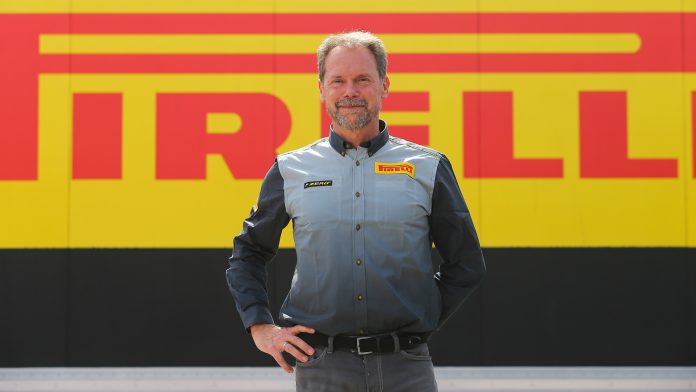
Giorgio Barbier, the visionary director of Pirelli, is gearing up for a monumental shift as the tire giant prepares to enter the exhilarating world of MotoGP. This transition marks a significant departure from their long-standing involvement in WorldSBK, as Pirelli sets its sights solely on the premier motorcycle racing championship by 2027. With Michelin bowing out, Pirelli is poised to take the reins, and Barbier couldn’t be more thrilled about the challenges and innovations that lie ahead.
In an exclusive interview, Barbier expressed his enthusiasm for this new endeavor, saying, “We are very satisfied with the path we have taken in Superbikes, and at the same time, we are preparing for this new challenge in MotoGP.” As Pirelli shifts its focus, they are keen on refining their tire technology, particularly in the rear tires this year, which will enhance their product range. Looking ahead to 2026, the emphasis will transition to front tire development, as Barbier acknowledges the complexities involved: “This type of compound is always delicate, given that the choice is unique, and we would like to expand the range.”
What can fans expect from Pirelli tires in MotoGP? Barbier reassures enthusiasts that the characteristics will remain consistent with what riders have experienced in production series: “The features of Pirelli in MotoGP will still be the same as those that pilots have experienced in production series because that is our philosophy and our approach.” While each manufacturer brings unique techniques and processes to the table, Barbier insists that their mission is not to replicate but innovate.
Highlighting the transition, Barbier revealed that Toprak Razgatlıoğlu will be using the same tires he has raced with in SBK, providing him with a familiar connection. He noted, “Without a doubt, Toprak will embrace the Pirelli concept in two years, while Bulega will be the first to learn about it, as Ducati has entrusted him with the test rider position.” This could offer Nicolò Bulega a head start, as he will have the opportunity to experiment with various Pirelli tires, unlike Toprak, who must adapt back from Michelin.
However, the burning question remains: will MotoGP tires significantly differ from those used in SBK? Barbier clarified, “The difference will lie in a different size, profile, and rim.” The necessary resizing of tires will inevitably alter their behavior, but one core feature will endure: “The main characteristic of Pirelli, that is, the responsiveness of the front tire, will remain the same.” This responsiveness is crucial, as it enables riders to gauge their performance window and understand their machine’s behavior on the track.
Reflecting on Pirelli’s evolution, Barbier shared a humorous anecdote about the company’s automotive origins. “I often laugh when recalling that Pirelli had a car-centric mindset, focused on F1 and rallies. The initial mentality was to create a tire using a machine that made square tires. Transforming them into round ones took us over a year,” he chuckled. The early prototypes were unconventional, with one resembling a pear to aid cornering and another flat to enhance braking. The results were mixed, but the journey has been pivotal.
As he contemplates the future, Barbier mused about the challenges that come with adapting to Pirelli tires in MotoGP. “Easy is a term with many meanings. I hope for a MotoGP experience where you can express yourself to the fullest, with complete safety.” He recounted the testing experience at Misano, where initial doubts gave way to successful outcomes, promising that conditions will evolve as the season progresses.
One of the most intriguing aspects for Barbier is observing how the legendary Marc Márquez, regarded as the best rider in the category by 2025, will adapt to Pirelli tires. “Marc has learned firsthand what it means to push the limits: he has become more sensitive and, in fact, still crashes, but with less violence as he searches for the edge.” This nuanced relationship between Márquez and Pirelli’s front tires could redefine the dynamics of MotoGP racing.
As Pirelli prepares to make its mark in MotoGP, the excitement is palpable. With innovative technology, a commitment to excellence, and the potential for transformative racing experiences, the future looks bright for both Pirelli and the world of motorcycle racing. Fans and competitors alike will be watching closely as this new chapter unfolds in the thrilling arena of MotoGP.