


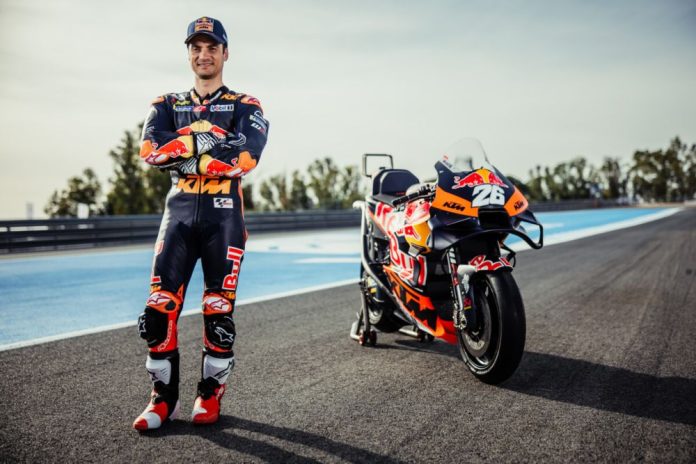
Dani Pedrosa, the legendary three-time world champion and current test rider for KTM, has pulled back the curtain on the highly anticipated MotoGP project set for 2027, revealing critical insights that could reshape the racing landscape. As the clock ticks towards a new era in motorsport, Pedrosa’s revelations underscore the importance of tire technology, engine development, and the evolving regulatory framework that teams must navigate.
“Up to now, everything is going according to the schedule that KTM has set for the new bike,” Pedrosa stated, signaling that the team is firmly on track. The new engine, designed to debut in 2027, has already successfully tested in the workshop, a promising sign for the Mattighofen-based manufacturer. However, the timeline for the inaugural track testing remains ambiguous, creating a cloud of anticipation. Pedrosa emphasized KTM’s commitment to integrating Pirelli’s new tires into their strategy, declaring, “because it simply makes more sense.” Yet, the absence of a tire testing plan adds a layer of complexity to their preparations.
Despite the looming timeline, Pedrosa is measured in his approach: “We are not in a hurry, but of course, we don’t want to stretch things out too much.” Adapting to new tires is a pivotal element of their strategy, and the stakes are higher than ever with the impending switch to Pirelli.
The transition to Pirelli tires is described by Pedrosa as “a radical change.” Drawing from his own profound experiences, he recalls the significant shifts he encountered during prior tire transitions between Michelin and Bridgestone. “It’s quite significant, to be honest. It’s something very radical,” he noted, shedding light on the monumental impact this switch could have on racing dynamics. The extent of the challenge hinges on how drastically different the new tire compounds are from what teams are currently accustomed to. Pedrosa knows firsthand that a tire change can fundamentally alter a motorcycle’s entire setup, affecting everything from stiffness to riding style and braking techniques.
He pointed to Moto3 and Moto2 as case studies where the shift to Pirelli has dramatically influenced performance. “We’ve seen how lap times improved, and I’ve spoken with some teams. They had to make changes in the chassis and riding style. Above all, the riders had to adapt.” He frames this transition as a “process,” emphasizing the race to see which teams can adapt quickest and who might start with a more favorable base.
Pedrosa’s own experiences with the new Pirelli tires during testing at Misano remain confidential due to contractual obligations, but he acknowledges the importance of these developments in shaping the future of MotoGP.
Looking ahead, the regulatory changes for 2027 herald a shift in aerodynamics and the banning of holeshot devices and height adjustment systems. When asked whether these changes were necessary, Pedrosa replied cautiously yet affirmatively: “Yes, I think it’s important.”
These adjustments promise to enhance rider control, particularly in managing wheelies and improving grip. Critically, they will also transform race starts, which Pedrosa critiques for their predictability. “If you make a good start, you’re basically well positioned for the first corner, as long as you have a good launch position.” The new regulations are set to inject unpredictability into race dynamics, allowing for more opportunities to gain positions and rekindle the excitement of on-track battles. “I believe you’ll be able to recover more positions. That opens up the fight on the track again,” he concluded, hinting at a thrilling future for MotoGP fans.
As the clock ticks down to 2027, all eyes will be on how these changes unfold, with Pedrosa’s insights serving as a crucial roadmap for teams and fans alike. The landscape of MotoGP is on the brink of a transformation that promises to deliver exhilarating races and unpredictable outcomes.