


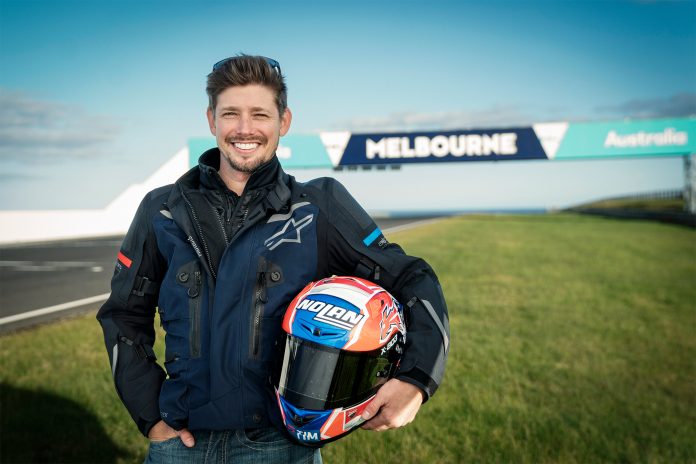
A decade has passed since the explosive clash between Casey Stoner and Valentino Rossi at Jerez, a moment that forever altered their relationship in the MotoGP paddock. Stoner, reflecting on this infamous incident, has finally opened up about his now-iconic statement, “Obviously, your ambition has exceeded your talent.” This biting remark, made in the heat of the moment in 2011, has lingered in the minds of fans and commentators alike, and now Stoner is ready to provide context and insights from a place of maturity and reflection.
In a recent documentary released by Moto.it, Stoner revisits this contentious chapter of his career, peeling back the layers of emotion that surrounded that fateful race. Conducted through a series of interviews spanning from 2023 to 2025, the film captures Stoner’s candid account of not just the on-track encounter but the ensuing fallout that shaped his views on respect within the sport.
The Australian rider reveals that his controversial comment was not premeditated but rather a spontaneous reaction fueled by frustration. “In that first moment, there was a bit of pride; he took the opportunity, but he made a big mistake. As I said, ambition was more important than talent,” Stoner explains, underscoring his disappointment that extended beyond the collision itself. He highlights a crucial moment when Rossi returned to apologize, fully geared up, and admits he felt little respect for that gesture: “When he came back to apologize wearing his gloves and helmet, it didn’t resonate with me.” Stoner emphasizes that a private approach would have made a significant difference in their exchange.
Ducati, a pivotal part of Stoner’s career, also comes into focus in this retrospective analysis. He candidly expresses the emotional toll of witnessing Rossi’s tenure with the Italian team, knowing the immense pressure on the crew and feeling they didn’t deserve the criticism. Stoner’s connection to Ducati runs deep, as he had forged close relationships with the mechanics and engineers who supported him through challenging times.
The documentary further reveals Stoner’s frustration over the negative commentary aimed at his technical team. “With the budget we had, which was very small, we did everything we could and still fought for the championship every year,” he asserts. He recalls the sting of attacks from Rossi’s camp, stating, “I don’t like it when someone attacks my family, my mechanics, my engineers, and all my friends from Ducati.”
Respect among rivals is a recurring theme in Stoner’s narrative. He acknowledges the immense skill required to ride these powerful machines and insists that he has always respected his competitors, even when that respect wasn’t reciprocated. As time passes, he believes that perceptions may have shifted. “After working two years with Ducati and retiring, maybe Valentino understood better how difficult it was and respected more what I had accomplished there,” he reflects.
In closing, Stoner offers a more serene perspective on his journey and the evolution of his views on Rossi. “As you get older, your perspective changes significantly, and now I’m very happy for him, for his family, and for the team he has built.” This newfound tranquility marks a poignant chapter in the saga of two of MotoGP’s greatest icons, showcasing how time can soften even the most intense rivalries.