


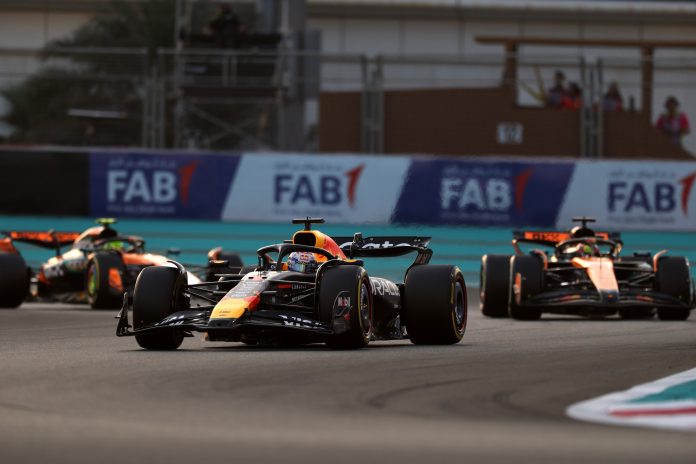
Max Verstappen has ignited a firestorm in the Formula 1 world with a bold assertion that could shake the very foundations of the sport. Following a tumultuous season where five cars were disqualified for infractions, Verstappen claims that if the FIA were to conduct thorough checks on all 20 cars after a race, “half of them are definitely under” the legal limits. This shocking statement raises serious questions about the integrity of the teams and the regulatory framework in the sport.
This season has been nothing short of dramatic, with significant penalties handed down to key players. The disqualifications included both Ferraris at the Chinese Grand Prix and Pierre Gasly’s Alpine, along with the McLaren duo in Las Vegas. The latter scenario dramatically shifted the championship landscape, as Lando Norris and Oscar Piastri, who finished second and fourth, found their results nullified due to violations that cost them critical championship points—18 for Norris and 12 for Piastri.
Verstappen, who was in a tight title race, viewed these disqualifications as a stroke of luck that reinvigorated his championship hopes. “That was an early Christmas present for me,” he remarked, reflecting on how the events in Las Vegas made the season finale more exhilarating. With his rivals penalized, Verstappen was able to claw back into contention, reducing a staggering 104-point deficit to just two points after securing wins in Qatar and Abu Dhabi.
The controversy surrounding the McLaren disqualifications stemmed from excessive wear on their skid blocks. Technical delegate Jo Bauer flagged Norris for having two measurements below the mandated 9mm limit, while Piastri faced three infractions. This raised eyebrows about the FIA’s testing consistency, as Verstappen highlighted the potential for more disqualifications if every car were subjected to rigorous scrutiny. “Of course, you always try to find the limit. We all do,” he explained, suggesting that teams frequently push the envelope, often escaping detection.
However, implementing extensive checks across the board poses logistical challenges. Verstappen acknowledged that enforcing such measures would require a significant increase in technical personnel at every race, a situation he deemed impractical.
The randomness of the FIA’s enforcement has drawn criticism from other drivers as well. Alex Albon voiced his concerns, suggesting that the current approach opens the door for teams to exploit loopholes. “I’d almost rather have 20 cars get checked every weekend and then you’d have a fair game,” he stated, advocating for a more consistent and transparent regulatory process.
As the F1 community grapples with these revelations, the integrity of the sport hangs in the balance. With Verstappen’s provocative claims echoing in the paddock, it’s clear that the need for reform in the FIA’s regulatory practices is more pressing than ever. The stakes are high, and as the championship race heats up, the implications of these disqualifications could resonate far beyond this season, demanding a reevaluation of how rules are enforced in the pinnacle of motorsport.