


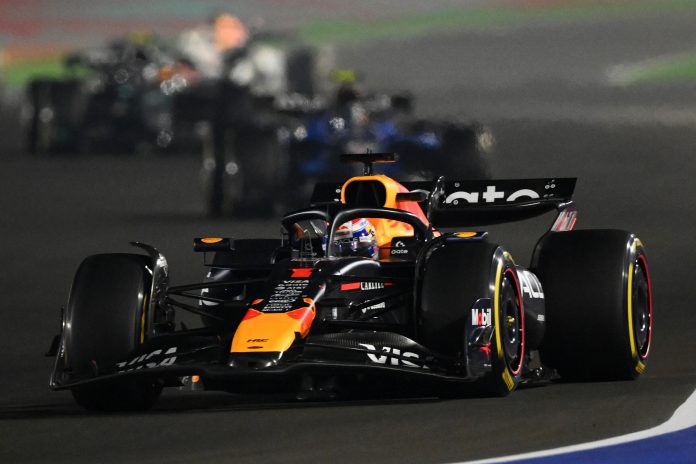
Max Verstappen has stepped into the spotlight, making waves with his recent remarks about team dynamics in Formula 1. The reigning world champion didn’t hold back when discussing McLaren’s controversial decision to avoid naming a clear lead driver, a choice he believes is detrimental to the team’s performance.
Verstappen’s perspective is rooted in his own successful experiences, where he has thrived under a structured hierarchy. He emphasized that if he were at the helm of a racing team, he would ensure a definitive number one and number two driver designation. This strategy, according to Verstappen, is essential for maximizing the team’s potential and preventing conflicts that could arise from equal status among drivers.
The Dutch driver’s comments come in light of McLaren’s current challenge of balancing the talents of Lando Norris and Oscar Piastri. Both young drivers have shown immense promise, but without a clear leader, the team finds itself in a precarious position. Verstappen suggested that the absence of a defined hierarchy could lead to compromised performance, affecting both driver morale and the team’s overall strategy on the track.
As McLaren navigates this tricky situation, Verstappen’s insights serve as a reminder of the cutthroat nature of Formula 1, where clarity and decisiveness can often make the difference between victory and defeat. With tensions high and competition fierce, it’s clear that establishing a strong leadership structure could be crucial for McLaren if they hope to reclaim their status as front-runners in the sport.
In the world of high-speed racing, where every fraction of a second counts, Verstappen’s call for a clear number one and number two isn’t just an opinion—it’s a battle cry for a more disciplined approach that could steer a team toward success.