


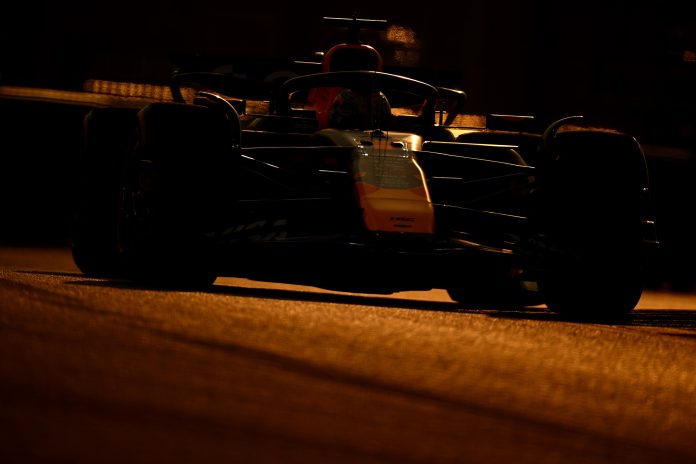
The 2026 Formula 1 season is poised to be nothing short of a revolutionary challenge for Max Verstappen, as the young superstar gears up for a seismic shift at Red Bull Racing. In a span of just twelve months, the reigning world champion will find himself amidst a whirlwind of changes that could redefine his career trajectory. Gone are the familiar faces of Christian Horner and Helmut Marko, replaced by new leadership under Laurent Mekies and Oliver Mintzlaff, which will undoubtedly influence Verstappen’s performance on the track.
As if that weren’t enough, Verstappen will also be adjusting to a completely new car, a brand new engine, and an entirely restructured team dynamic. The departure of key personnel, including his chief mechanic Matt Caller, who is set to join Audi, as well as performance engineer Tom Hart and a host of other crucial support staff, could leave the four-time champion navigating uncharted waters. Even his trusted ally, Gianpiero Lambiase, may take a step back from direct race engineering duties, forcing Verstappen to adapt to an evolving environment with less familiar support.
With rival teams eagerly eyeing Red Bull’s upheaval, the stakes have never been higher. There’s a palpable sense of urgency as competitors anticipate the potential unraveling of Verstappen’s dominance, especially given his performance-related exit clause that could activate if he finds himself outside the championship’s top two by the halfway mark. This reality injects an added layer of pressure into an already turbulent landscape. Yet, despite the mounting challenges, it would be a grave mistake to assume Verstappen’s departure is inevitable. He experienced a taste of change during the latter part of the past season and embraced it with enthusiasm, stating, “We have a great atmosphere at the moment. We’re really on a roll — positive energy, belief, confidence — and that’s exactly what you want heading into next year.”
However, the euphoria of the past may evaporate quickly once the 2026 season begins. The feel-good factor from a strong finish in Abu Dhabi, where Verstappen narrowly missed out on the championship title, will be put to the test against the backdrop of a groundbreaking new engine and car design. The uncertainties surrounding Red Bull’s performance in the new competitive landscape are daunting. While Mercedes is expected to remain a formidable force, the picture for the rest of the grid is murky. Red Bull’s ambitious engine project, bolstered by a wave of former Mercedes staff, has promise, but initial struggles with performance and reliability could leave the team scrambling for solutions.
Verstappen’s expectations are tempered; he isn’t anticipating an immediate return to dominance. His primary concern will be whether the newly developed engine can provide the competitive edge he needs and whether he can avoid being relegated to the back of the pack. The true test of Red Bull’s mettle will come when the pressure mounts and the team is forced to adapt to unforeseen challenges. Mekies has openly acknowledged the likelihood of tough times ahead, stating, “It would be naive to think that we are going to land it on the top spot straight away there. We know we are going to have a few very, very tough months, many sleepless nights, a few headaches.”
The exit of Marko, who had long been a stabilizing force and confidant for Verstappen, adds another layer of complexity to the unfolding drama. Marko’s departure stemmed from a mix of internal tensions and public missteps that ultimately made him a liability in Red Bull’s quest for a more harmonious team environment. His absence could shift the dynamics within the team, forcing Verstappen to recalibrate his relationships and navigate the new hierarchy that Mintzlaff is keen to establish.
While stability may not be the immediate reality for Verstappen, fostering a sense of calm amidst chaos will be crucial if Red Bull hopes to retain him long-term. Verstappen has made it clear that his primary focus is racing, devoid of unnecessary off-track distractions. Reflecting on the past year, he noted, “I’m happy with myself and going into next year I’m not in a state of having to worry about my skills or whatever. So, yeah, I feel good.”
As the new season approaches, the state of Formula 1 racing itself could play a pivotal role in shaping Verstappen’s future. The uncertainty surrounding how cars will perform under the new regulations raises questions about whether the sport will deliver the exhilarating battles fans crave or devolve into a strategic game of energy management. If the latter comes to pass and Verstappen finds himself wrestling with subpar performance while lacking enjoyment in the sport, the allure of a possible sabbatical or a switch to his burgeoning GT team could become increasingly tempting.
As Verstappen stands on the precipice of this transformative chapter, the racing world watches with bated breath, anticipating how he will navigate this unprecedented upheaval. The road ahead is fraught with challenges, but within those challenges lies the potential for greatness, should he and Red Bull rise to the occasion.