


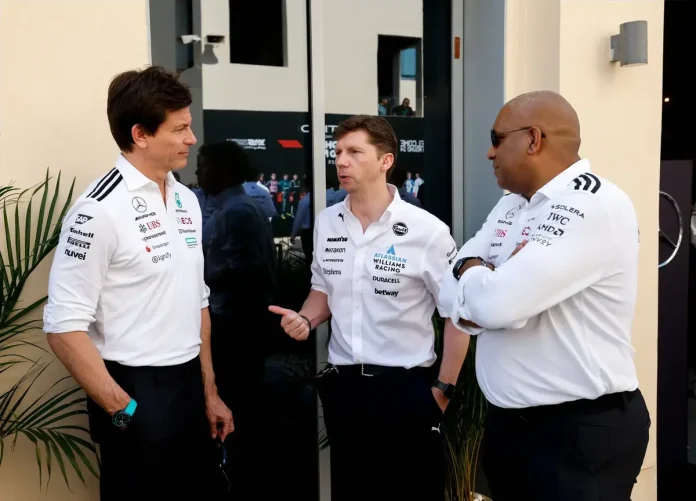
In a bold revelation that has sent shockwaves through the Formula 1 community, Toto Wolff has pinpointed the “biggest risk” looming over F1 teams as they brace for monumental changes in 2026. With the sport on the brink of its most significant overhaul in technical regulations ever, concerns about the accuracy of simulations and tests are at the forefront of Wolff’s mind.
Next season, F1 cars will not just be tweaked; they will undergo a seismic transformation. The new regulations will introduce active aerodynamics to the chassis and radically enhance power units, boosting electrical capabilities from a mere 120kw to a staggering 350kw. The much-discussed MGH-H component will be eliminated, making way for a new era of engineering challenges.
Mercedes, a powerhouse since the turbo hybrid era began in 2014, is currently viewed as the favorite to dominate this new landscape. However, the team’s reign of eight consecutive constructors’ championships was abruptly halted in 2022, largely due to the awkward transition to ground-effect regulations. This stark reality underscores the unpredictable nature of F1, making Wolff’s warnings even more pertinent.
Wolff emphasized that the true test lies ahead when these radically redesigned cars finally hit the track. “Only the future will show,” he stated during a media briefing that included RacingNews365. His insights into team dynamics reveal a deeper understanding of the complexities involved in F1. He noted that attributing success or failure to a single factor is a dangerous oversimplification. Whether it’s a new management approach, changes in key personnel like the team principal or technical director, or the introduction of fresh talent, it all boils down to teamwork and collective decision-making.
The crux of Wolff’s message is the importance of correlation between virtual data and real-world performance. “That is, today, with all the limitations we have, where you find out about your car,” he explained. If the performance in simulations does not translate to the actual track, teams face grave consequences. The stakes have never been higher, and for Wolff, a self-proclaimed “glass-half-empty person,” confidence is not a luxury he indulges in. Instead, he remains steadfast in his commitment to ensuring that Mercedes produces a competitive car and power unit capable of reclaiming championship glory.
As the countdown to 2026 begins, Wolff’s insights serve as a stark reminder of the unpredictable and fiercely competitive nature of Formula 1. With radical changes on the horizon, teams must navigate this treacherous landscape with precision, or risk being left in the dust.