


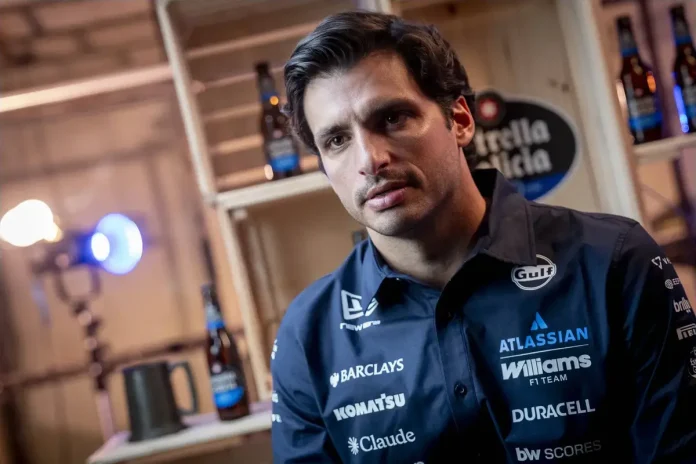
In a dramatic prelude to the new Formula 1 season, Carlos Sainz has taken the spotlight, passionately addressing the hot topic of race starts and their potential implications for the upcoming races. The Williams driver spoke at an event in Madrid, organized by his sponsor Estrella Galicia, where he shared insights on the current state of the F1 Circus as anticipation builds for the first Grand Prix of this thrilling new era.
The conversation surrounding race starts has intensified, particularly with concerns about the turbo component’s delayed ‘push.’ However, Sainz boldly dismissed fears regarding driver safety, asserting, “Partenze pericolose? Non credo.” He emphasized that there has been significant learning in the realm of starts, suggesting that teams are better equipped than ever to navigate the challenges ahead. “Magari bene, magari male, ma non credo che sia pericoloso,” he stated confidently, hinting at the unpredictable nature of the opening moments of a race.
What’s more, Sainz offered a tantalizing glimpse into the strategic shifts we might witness this season. He believes that this year, the potential gains from a strong start could be exponential, stating that while previously a driver might gain 4 or 5 meters, this season, they could see advantages of 15 to 20 meters—translating to 3 or 4 crucial positions on the grid. This insight could change the dynamics of races, making the start more critical than ever before.
Delving deeper into the challenges faced by his team, Sainz hinted at the difficulties that have plagued Williams at the start of the season. While he refrained from divulging too many specifics, he acknowledged the production and manufacturing issues that had prevented the team from showcasing their car during the Barcelona shakedown in late January. “È una storia troppo lunga da raccontare qui,” he remarked, implying that the setbacks were significant enough to warrant a thorough analysis of their production processes.
He elaborated on the team’s realization that their timeline was overly ambitious, leading to delays that have left them playing catch-up. “Non ci resta altro da fare che imparare ad analizzare perché credevamo una cosa e ne è successa un’altra,” Sainz reflected, illustrating the team’s commitment to learning from these missteps. His candid acknowledgment of the need to overhaul their manufacturing chains underscores the urgency for Williams to adapt and evolve in a fiercely competitive environment.
As the countdown to the season opener ticks away, fans and analysts alike are left to ponder the high stakes of race starts and the broader implications for teams like Williams. With Sainz’s insights echoing through the paddock, the anticipation for an electrifying season is palpable, setting the stage for what promises to be a groundbreaking chapter in Formula 1 history.