


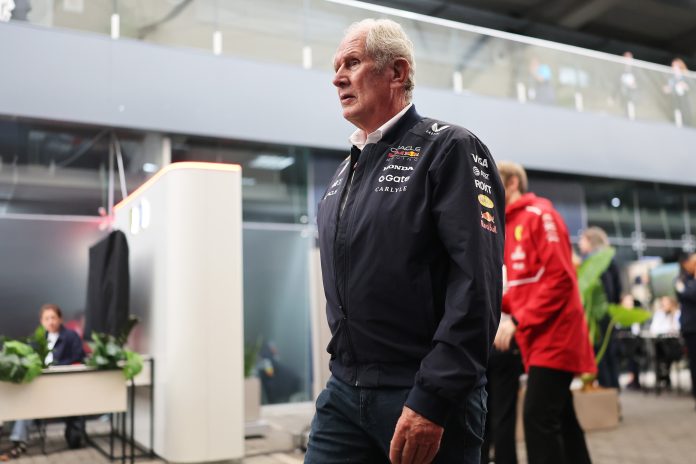
In a stunning twist in the world of Formula 1, Oliver Mintzlaff, the managing director of Red Bull GmbH, has broken his silence regarding the fiery comments made by the recently departed motorsport adviser Helmut Marko. Marko, a towering figure with a legacy spanning over two decades, left the Milton Keynes-based team at the conclusion of the 2025 season, having played a pivotal role in catapulting Red Bull to six-time constructors’ champions. His influence on the sport is undeniable, mentoring 17 drivers—including the illustrious champions Sebastian Vettel and Max Verstappen—since the energy drink giant took over the Jaguar Formula 1 team in 2005.
But Marko’s exit has not been a peaceful one. In a shocking press release, the 82-year-old did not hold back, launching a scathing critique of the team and particularly targeting former team principal Christian Horner, who faced dismissal shortly after the British Grand Prix in July. This dramatic fallout has sent shockwaves through the motorsport community, prompting Mintzlaff to step in and clarify the situation.
In an interview with De Telegraaf, Mintzlaff sought to distance himself and Red Bull from Marko’s harsh statements, asserting, “Those words about Christian are Helmut’s own. I can’t say anything negative about Christian. Simply because he meant a lot to Red Bull.” This defense underscores the significant contributions Horner made during his tenure, emphasizing that transitions, while often challenging, are sometimes necessary for growth. “There always comes a time when things aren’t going well,” Mintzlaff explained. “As a company, you have to make a decision. Are you going to give someone more time, or is it time for a new leader? We felt it was time for a change.”
Marko’s comments suggested a decline within Red Bull, but Mintzlaff firmly disagreed, stating, “I disagree with Helmut’s statements. Yes, it’s logical that things change within an organisation. Perhaps Dr Marko has changed over the years as well.” His reflections suggest that change is a natural part of any successful organization, especially one as dynamic as Red Bull.
He further highlighted the unique nature of the duo’s long-standing collaboration, noting, “Christian and Helmut have worked together wonderfully for many years, since the start in 2005. So we’re talking about more than twenty years.” This length of service is rare in the fast-paced world of sports, where leadership can shift dramatically in the blink of an eye. “Give me a few examples of other major sports organisations where the leadership team remains the same for so long,” Mintzlaff challenged.
While some may view the departures of Marko and Horner as a negative shift, Mintzlaff sees a silver lining. “But I would say it’s unique that they’ve been here together for so long and have achieved so much. Sometimes you just need a change to shake things up.” His words resonate with a call for optimism amidst uncertainty, suggesting that Red Bull is poised for a new chapter, one that could redefine its future in the high-octane world of Formula 1 racing. The coming months will undoubtedly reveal how this shakeup will impact the team’s trajectory as they look to reclaim their dominance on the track.