


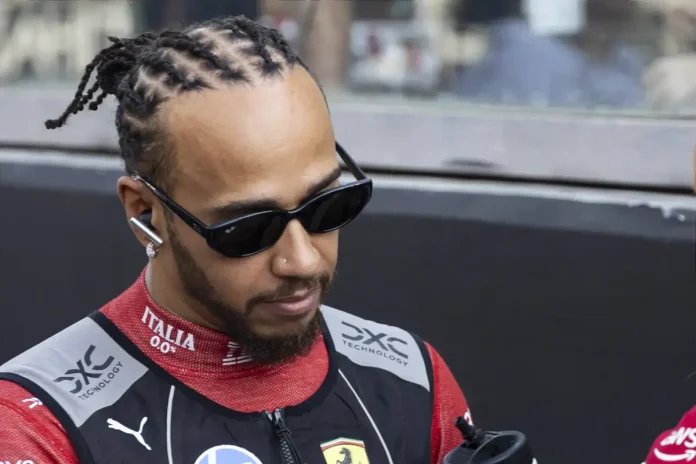
Mercedes has boldly confronted the seismic shift following Lewis Hamilton’s departure, reflecting on what has been described as a “phenomenal run” with the legendary driver. Andrew Shovlin, the trackside engineering director, has shared insights into the implications for car development in the wake of Hamilton’s exit, a move that sent shockwaves through the motorsport community as he transitioned to Ferrari at the end of 2024.
Hamilton’s alliance with Mercedes was nothing short of extraordinary, establishing a dominating legacy that saw them clinch six drivers’ titles and eight constructors’ championships from 2014 to 2021. However, the transition to Ferrari has not been kind to the seven-time world champion, who has found himself grappling with a dismal season, failing to secure a single podium finish. In a strategic pivot, Mercedes has turned to their teenage prodigy, Kimi Antonelli, to step into the spotlight alongside George Russell, who has now taken on the mantle of team leader.
Russell’s ascension to leadership marks a significant shift within the Brackley-based team, a role Hamilton had steadfastly occupied for nearly a decade. This transition has enabled Antonelli to acclimate to the rigors of Formula 1 without the burdensome weight of car feedback and development responsibilities. Shovlin emphasized the positive dynamics at play, asserting that Russell’s seamless adaptation to his new role has mitigated any potential fallout from Hamilton’s departure.
When discussing the impact on car development, Shovlin was candid with the media, stating, “To be honest, with George it’s fine.” He elaborated that the team’s development strategies are largely driven by simulations rather than solely relying on driver feedback. The emphasis is on optimizing downforce, striking the right balance, and enhancing aerodynamic efficiency rather than making reactive changes based on driver requests. “Most of it comes from simulations: you’re searching for downforce, you’re searching for certain balance characteristics that you know will deliver lap time, you’re trying to reduce drag,” he explained.
Shovlin underscored the value of having a consistent figure like Russell behind the wheel, noting that his familiarity with the current car regulations has been crucial for maintaining developmental continuity. “There was never really any worry about losing our way from a development point of view,” he reassured. The addition of Antonelli, who has shown promising talent, has further solidified their team dynamics. Shovlin praised Antonelli’s ability to communicate effectively about the car’s performance, dispelling concerns about the learning curve.
Reflecting on Hamilton’s illustrious tenure at Mercedes, Shovlin acknowledged the inevitable challenges that come with change. “We had a phenomenal run with Lewis, with an awful lot of success, and he decided to try a new challenge at Ferrari,” he remarked. Emphasizing their long-term vision, Shovlin expressed confidence in their direction, stating, “We were always looking to Kimi as the future, and there was inevitably going to be a learning year. We were fully committed to that, and on balance, I think it’s gone well.”
As Mercedes navigates this new chapter, the focus remains on innovation and adaptation, ensuring that even without Hamilton, the legacy of excellence continues to drive them forward. The question now looms large: can this revamped lineup reignite the fires of success that defined their glory days? Only time will tell, but the journey is already shaping up to be one for the ages.