


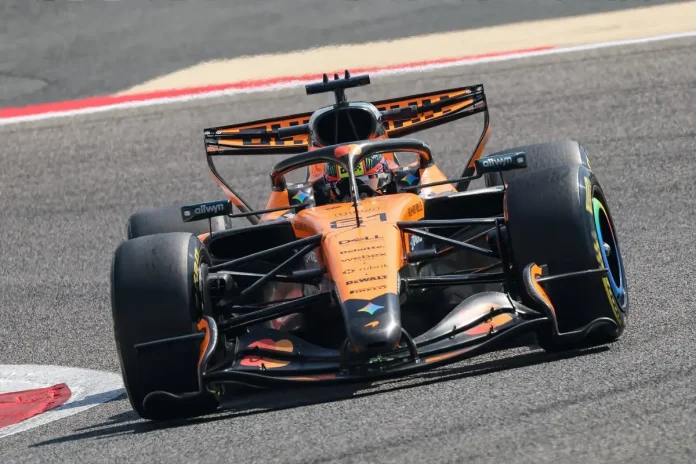
In a striking forecast for the upcoming Australian Grand Prix, McLaren’s team principal Andrea Stella has shed light on the heightened challenges drivers will face as Formula 1 prepares to embrace revamped power unit regulations in 2026. As teams gear up for the season opener in Melbourne, the focus on energy management is set to take center stage, making it a pivotal element of strategy on the track. Under the new framework, drivers will find themselves busier than ever, as they juggle the intricate demands of harvesting and deploying energy in a race environment.
Stella’s insights come on the heels of pre-season testing at the Bahrain International Circuit, a setting he described as less taxing compared to the formidable Circuit de Barcelona-Catalunya, where teams conducted a private shakedown earlier this year. In an engaging discussion with media, Stella emphasized the varying characteristics of different circuits, highlighting how these features will significantly impact power unit performance. “I think, in 2026, we will have to look at the characteristics of the circuits, including this feature [energy management], related to how easy it is at a circuit for the power unit requirements,” he explained.
As the paddock shifts its attention to the challenging Albert Park circuit, Stella anticipates a return to the demanding lift and coast technique, especially if the FIA maintains the current recharge limit of 250 kW instead of allowing an increase to 350 kW. “Now we go to Australia, and go back to a circuit that will be a bit more difficult,” he noted, suggesting that the drivers will need to adapt their styles to optimize energy use for better lap times. The McLaren boss is keenly aware that the balance between energy management and competitive racing will be critical. “When you have to go racing, you have to defend, you have to attack,” Stella stated, underscoring the complexities that lie ahead.
Despite the daunting landscape shaped by new regulations, Stella remains optimistic about McLaren’s progress as they prepare for the season kickoff. He commended the collaborative efforts with Mercedes, the supplier of their power units, acknowledging the strides made during testing. “We have learned a lot during testing,” he said, expressing gratitude for the hard work of Mercedes High Performance Powertrains. However, he also recognized that the journey is far from over, admitting there is still much to master in terms of engine control and the overall exploitation of the power unit’s potential.
As the eyes of the F1 world turn to Australia, the anticipation builds. Will McLaren rise to the occasion, or will the new challenges prove too formidable? The stage is set for a thrilling contest, and the drivers will need every ounce of skill and strategy to navigate the complexities of the modern racing landscape. Fans can expect an exhilarating showdown that promises to test the limits of both man and machine.