


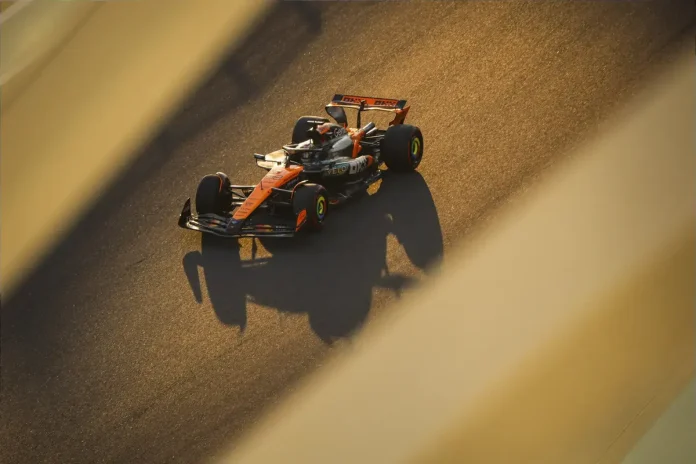
As the dust settles on the 2025 Formula 1 season, McLaren is brimming with optimism about its strategic pivot towards the 2026 season. The team’s engineering technical director, Neil Houldey, stands firm in his belief that halting the development of the 2025 car was a masterstroke. Despite a season where Red Bull, spearheaded by Max Verstappen, seemed to eclipse McLaren’s early momentum, Lando Norris triumphed by clinching his first World Championship in the MCL39.
In stark contrast to McLaren’s foresight, Red Bull opted to continue enhancing their 2025 challenger until the closing stages of the season. Team principal Laurent Mekies has articulated that this decision was driven by a desire to refine their processes and extract maximum performance, even acknowledging the inherent risks of this approach in light of the imminent regulatory changes.
McLaren’s shift in focus to the 2026 car appears to be a calculated gamble, with Houldey revealing that recent simulator sessions have yielded impressive performance gains that would have been unattainable had they remained entrenched in 2025 development. He stated, “It would have made a bigger difference to next year. I think next year, if we’d have continued to develop the 2025 [car], we’d have gone into 2026 – although we don’t know where we’re going to go – we would certainly have gone in slower than we’re going to go in.”
While Red Bull’s late-season upgrades have sparked discussions about their impact on the 2026 landscape, Houldey remains steadfast in his conviction that McLaren’s early focus will pay off. He mentioned the razor-thin margins that define success in F1, where “thirty milliseconds was a good upgrade at that point.” The reality is that as teams inch closer to performance ceilings, the returns on continued development diminish significantly, making McLaren’s shift to 2026 appear increasingly prescient.
The contrasting strategies of the two teams underscore a pivotal moment in F1. As Houldey noted, the adjustments in car dynamics, such as rear ride height and front ride height, could yield significant performance advantages, further justifying McLaren’s decision to redirect their resources.
In an era where all-new cars are set to debut in 2026, the potential for a shake-up in the competitive order looms large. Houldey emphasized the importance of a consistent development approach rather than merely chasing performance targets. “It’s about the way you work, the way you develop the car… you just keep going, keep pushing each other,” he explained, encapsulating McLaren’s philosophy as they forge ahead.
With anticipation building for the unveiling of the 2026 car, McLaren joins the ranks of teams yet to announce their launch dates. The first pre-season test scheduled for January 26 in Barcelona will be a crucial test of their strategy. As the turbo hybrid era fades into memory, all eyes will be on how McLaren’s bold choices will shape their fortunes in the new season and beyond. This is a high-stakes game, and McLaren is betting big on their long-term vision to reclaim their status among the elite in Formula 1.