


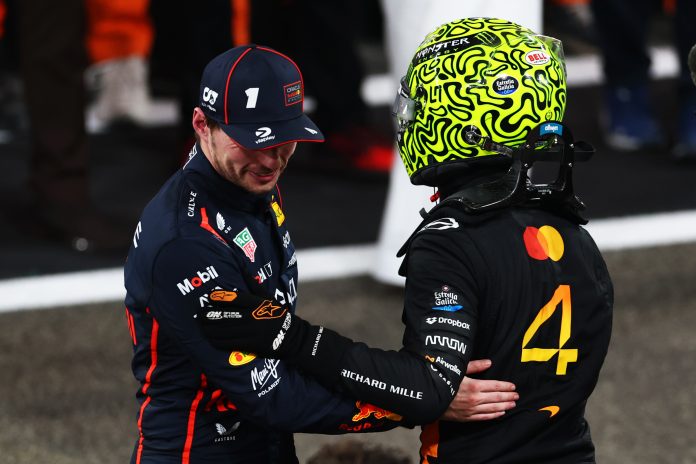
Max Verstappen, the reigning king of Formula 1, has made a startling confession that could shake the very foundations of his celebrated racing career. The Dutch driver, known for his fierce competitiveness and relentless drive, has revealed that the grueling demands of F1 racing have taken a serious toll on his body, stating bluntly that his back is “falling apart.” This startling admission sheds light on the often-overlooked physical challenges faced by elite drivers who endure extreme G-forces and can lose up to five percent of their body weight during intense races.
The ground effect era, reintroduced in 2022, has exacerbated these physical strains, pushing drivers like Verstappen to their limits. The changes in car design have not just altered racing dynamics but have also significantly increased the strain on drivers’ bodies. With Red Bull dominating the early stages of this ruleset, Verstappen’s experiences reflect a growing discontent among drivers regarding the discomfort these cars bring.
In a candid conversation with Formula Passion, Verstappen voiced his disdain for the current generation of F1 cars. “I won’t miss these cars. At first, following the others was fun, but as time went on, it wasn’t anymore,” he lamented. He highlighted how the thrill of racing has dissipated, noting that while the newer cars allow for slightly better control, they lack the excitement and responsiveness of their predecessors. “I didn’t find them very fun to drive, and they haven’t been comfortable at all over the years: my back is falling apart and my feet always hurt,” he revealed, illustrating the physical agony that accompanies the high-speed battle for supremacy on the track.
Verstappen’s comparison to motocross underscores a stark reality: while all motorsport is demanding, the unique challenges posed by modern F1 cars can be particularly punishing. His preference for the cars of 2015-2016 speaks volumes about the direction in which he believes the sport should head.
Looking ahead, the 2026 season promises a radical overhaul of regulations, introducing 50 percent electrical power, active aerodynamics, and sustainable fuels. These changes are not just a nod to environmental concerns but could also be pivotal for Verstappen’s future in F1. His relationship with Red Bull hinges on their ability to provide him with competitive machinery that can withstand the rigors of a physically taxing sport.
As Verstappen contemplates the future, one thing is clear: the physical ramifications of racing in F1 are as intense as the competition itself. With changes on the horizon, fans will be watching closely to see how these developments unfold and whether they will bring about a new era of racing that prioritizes driver comfort and performance. The clock is ticking, and Verstappen’s legacy may very well depend on it.