


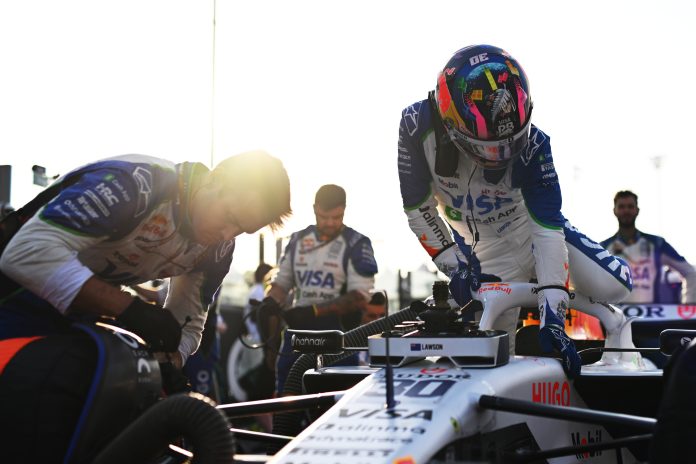
Liam Lawson has ignited a firestorm of anticipation as he emphasizes the monumental challenges awaiting Formula 1 drivers in the upcoming season. With a seismic shift in regulations looming, the sport is poised for its most radical transformation in a decade, and Lawson is keenly aware that his peers will face an overwhelming amount of knowledge to absorb. The stakes have never been higher, as the championship gears up for a complete overhaul of both chassis and power unit regulations that promise to redefine the very essence of racing.
The changes are not just incremental; they represent a fundamental reset that combines sweeping aerodynamic alterations alongside the first significant modifications to engine design since 2014. This dual upheaval means drivers will need to master a comprehensive rulebook rather than just focusing on isolated elements, as was the case in previous years like 2017 and 2022. With the season extending into December for the first time, and track action kicking off in late January with a crucial five-day private test at the Circuit de Barcelona-Catalunya, teams are bracing themselves for the shortest offseason in history.
In a recent media interaction, Lawson, who is just 23 years old, candidly discussed how he plans to navigate this demanding offseason. “Yeah, pit stop at home, basically,” he quipped, before revealing his plans to visit family in New Zealand. However, he quickly pivoted to the reality of the situation, stating, “and then we’re basically back to work in early January.” This reveals not only his commitment but also the relentless pace of preparation required in a sport where adaptation is key.
The regulatory changes promise to introduce active aerodynamics with new X and Y modes, making the cars not only lighter but also more compact. Furthermore, the split between electric power and traditional internal combustion engines has shifted dramatically from a 20/80 ratio to a more balanced 50/50 division. This evolution demands that drivers adjust to radically different power units, with an increased focus on energy management and strategic deployment that could alter race dynamics significantly.
One of the most significant changes is the elimination of the Drag Reduction System (DRS) after 15 seasons, replaced by innovative overtake and boost modes designed to enhance overtaking opportunities. Together, these modifications create a vastly different challenge for every driver on the grid. Lawson insightfully noted, “For the drivers, for us, it’s going to be a very different driving style next year, for us to get on top of these cars, and it’s probably going to take quite a bit of time.”
As the countdown to the new season begins, the entire paddock stands at the precipice of change, with excitement and uncertainty hanging in the air. With Lawson’s words echoing through the F1 community, it’s clear that everyone is bracing for a thrilling and transformative year ahead. The question is, who will rise to the occasion, and who will falter under the weight of these unprecedented challenges? The stage is set for an electrifying season of racing.