


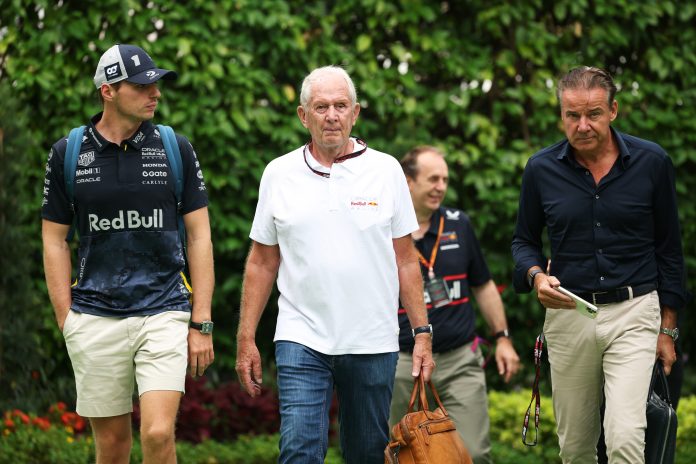
In a stunning twist in the world of Formula 1, Helmut Marko, a titan of Red Bull Racing and a key architect behind its meteoric rise, has announced his retirement from his advisory role, igniting a flurry of speculation regarding the circumstances of his departure. Marko, who has been integral to Red Bull’s success since its entry into the sport in 2005, has been instrumental in scouting and nurturing talents like Sebastian Vettel and Max Verstappen, leading the team to an impressive tally of six Constructors’ Championships and eight Drivers’ Championships.
At the age of 82, Marko’s exit raises eyebrows, especially given that he was contracted to remain with the team until the end of the 2026 season. The timing of his departure aligns with a significant transition for Red Bull, as it gears up for a new era featuring a fresh team principal, Laurent Mekies, and a strategic partnership with Ford for power unit supply. This impending shift has fueled rumors that Marko was under pressure from Red Bull CEO Oliver Mintzlaff to step aside, a narrative Marko has vehemently dismissed.
In an exclusive interview with Austrian TV channel RTL, Marko clarified the nature of his conversations with Mintzlaff, stating, “No, I was by no means pressured to leave. After some discussion, he [Mintzlaff] accepted it. [He tried to] persuade me, but saw that I was consistent. And we parted amicably.” This assertion aims to quell the swirling rumors of undue influence in his decision to retire, painting a picture of mutual respect and understanding between the veteran advisor and the team’s leadership.
As Red Bull looks to the future, the question of who will fill Marko’s significant shoes looms large. Although Verstappen currently stands as the pinnacle of driving talent, uncertainties linger regarding his long-term future with the team. Meanwhile, the emergence of new drivers like Isack Hadjar and 18-year-old Arvid Lindblad, who is set to race for the sister team in 2026, highlights the pressing need for a robust scouting strategy to ensure a steady influx of talent.
Interestingly, former champion Sebastian Vettel has been suggested as a potential successor to Marko, with the Austrian himself acknowledging that Vettel would be an excellent fit given his recent efforts to support young talents in the sport. However, a report from German publication Bild has thrown a curveball into the mix, indicating that Red Bull may not seek an immediate replacement for Marko, considering the possibility of leaving the position vacant.
As the Formula 1 landscape continues to evolve, Marko’s departure marks the end of an era for Red Bull, leaving fans and analysts alike to ponder the future trajectory of the team and its next generation of racing stars. The motorsport community will undoubtedly be watching closely as Red Bull navigates this transitional phase, seeking to uphold its legacy while embracing the challenges and opportunities that lie ahead.