


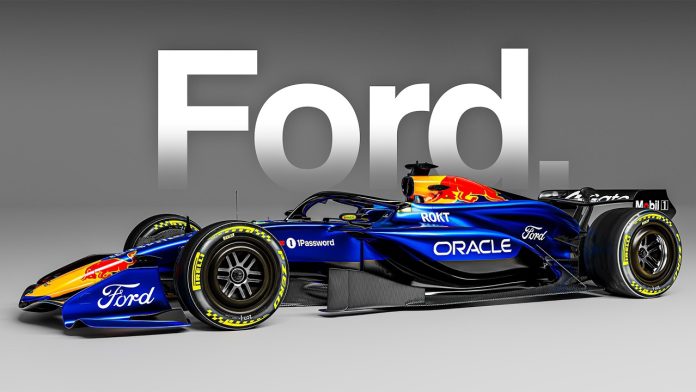
This month marks a pivotal moment for both Red Bull Racing teams as they prepare to unleash their groundbreaking in-house power unit. Though the initial winter test in Barcelona will occur behind closed doors, the significance of this event cannot be overstated. It serves as a critical milestone not just for Red Bull, but for Ford, which has invested substantial resources into this ambitious project. Ford Performance director Mark Rushbrook has stated that this upcoming test will be the litmus test for three years of intense development, aiming to determine if their efforts have resulted in a truly competitive power unit.
Ford’s involvement in Formula 1 has evolved dramatically since the early discussions, which were primarily focused on financial backing and electric components. Originally, the plan revolved around Ford contributing to the electrification aspects—think battery cells, motors, and software calibration. However, as the collaboration deepened, it became clear that the combustion engine would also play a pivotal role. Rushbrook revealed, “The original list was focused on the electrification part of it… That has certainly been delivered.” Yet, the unexpected pivot towards the combustion engine is where the excitement lies.
The automotive titan’s strategy shift reflects broader changes within the Ford Motor Company. As they navigate a future that encompasses internal combustion engines (ICE), hybrids, and fully electric vehicles, Ford recognized the necessity of engaging in combustion engine development alongside their electrification initiatives. Rushbrook noted, “It became increasingly important for us to be part of the combustion engine development as well.” This strategic pivot demonstrates Ford’s commitment to leveraging F1 technology to enhance their road car offerings.
The synergy between Ford and Red Bull has proven fruitful, especially as Rushbrook highlighted the opportunity for Ford to contribute significantly to the combustion engine components that are now actively being produced in Dearborn, Michigan. “A lot of the actual parts that are being made… are on the combustion engine side of the power unit,” he explained, underscoring the tangible benefits of this partnership.
Critics might wonder if Red Bull Powertrains was struggling on its own, but Rushbrook clarified that the collaboration has been more about enhancing capabilities than filling gaps. “It wasn’t necessarily that things were lacking,” he emphasized. The exchange of technical insights and expertise has allowed both entities to elevate their game, pushing Ford to new heights in quality control and manufacturing processes.
But what does Ford truly gain from its foray into F1? According to Rushbrook, the venture has deepened Ford’s understanding of both electrification and combustion engine design. The advanced manufacturing techniques honed through this collaboration have elevated their production standards, leading to improvements in dimensional and quality control. “It has really pushed us to a much higher level than where we’ve been during earlier programs,” he stated, illustrating the transformative impact of the F1 experience.
Looking ahead, Ford’s long-term strategy regarding F1 remains intriguing. With a commitment to developing a diverse range of power units, including combustion engines and hybrids, the company is keen to stay relevant as regulatory frameworks evolve. As discussions regarding the engine formula post-2025 heat up, Ford finds itself well-positioned. Initial proposals for a V10 have since been moderated to a V8 with electrification components, suggesting a pathway that aligns with Ford’s ambitions.
Rushbrook confirmed that Ford is prepared to adapt, saying, “As long as we have something that is reasonably relevant to us, we’ll be happy.” The willingness to engage in a V8 setup with some electrification underscores Ford’s readiness for a longer-term commitment to F1. With investments aimed at sustainable partnerships, the prospect of extending the collaboration with Red Bull beyond the current engine cycle is looking increasingly likely.
As the world watches the developments unfold, one thing is crystal clear: Ford’s strategic involvement in Formula 1 is far more than a mere footnote in the annals of motorsport history. It is a dynamic, evolving partnership that promises to reshape the future of both the racetrack and the road.