


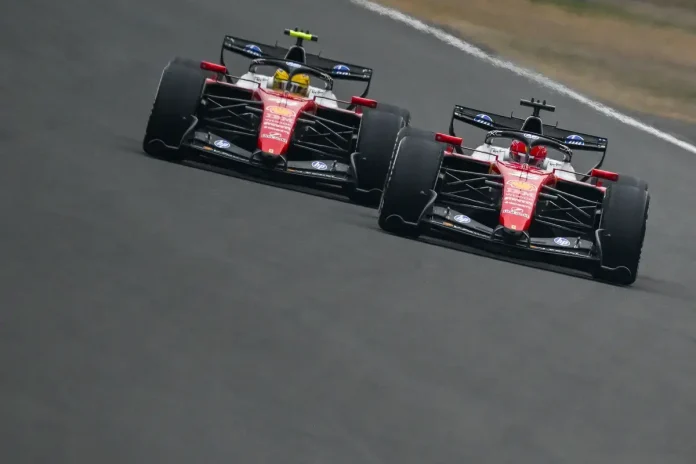
The 2026 Formula 1 season is igniting fierce rivalries on the track, but the stark reality of Mercedes’ overwhelming dominance is sending shockwaves through the paddock. After clinching victory in all three events so far, including a sprint race, the Silver Arrows have showcased a level of performance that leaves competitors, particularly Ferrari, scrambling for answers. Despite their impressive race starts that have seen them take the lead initially, Ferrari has yet to convert these fleeting moments into a grand prix win.
The pressing question looming over the Scuderia is whether they can mount a serious challenge for the championship or if they are destined to remain in Mercedes’ shadow. A deep dive into the data reveals both the potential and the pitfalls that Ferrari faces.
In the season opener in Australia, Ferrari found itself trailing Mercedes by a hefty 0.809 seconds in qualifying. However, this gap shrank significantly to just 0.351 seconds in Shanghai, signaling a glimmer of hope. The primary factor contributing to this improvement lies in energy management; during the Australian Grand Prix, Mercedes exploited its power unit advantage to the fullest. Yet, in cornering, the Ferrari SF-26 appeared nearly on par with its rival, with Charles Leclerc even clocking the fastest time in the second sector during qualifying in China.
The race day performance echoed these observations. While Ferrari showed competitive prowess, especially in the twisty sections, they suffered considerably in the high-speed sectors where Mercedes thrived. The telemetry data paints a vivid picture of the challenge ahead: Mercedes not only reached higher top speeds but also exhibited superior speed retention on the straights due to a phenomenon known as “super-clipping.” This was particularly pronounced in Australia, where it allowed Mercedes to extend their lead significantly.
But top speed isn’t the only hurdle for Ferrari. A closer examination reveals that tyre management is becoming a critical issue for the team. During the Australian race, Ferrari’s medium tyres initially provided a competitive edge, allowing Leclerc to fend off George Russell for a significant stretch. However, as the race progressed, the hard tyres proved less effective, failing to deliver the expected pace advantage over a fresher set from Mercedes.
In China, Ferrari’s ability to match pace at the start of stints quickly faded, particularly after the safety car restart. The Ferrari drivers averaged a lap time of 1:37.2 between laps 14 and 29, while Mercedes’ Antonelli posted an average of 1:36.9—just three tenths faster despite the ongoing battles. However, the second half of the race told a different story. From lap 30 to 56, Mercedes averaged 1:35.8, stretching the gap to seven tenths per lap.
The data indicates that Mercedes not only takes longer to optimize its tyres but also manages to maintain their performance for a longer duration, resulting in less degradation compared to Ferrari. This trend is becoming increasingly evident as the season unfolds, with Ferrari’s current average deficit to Mercedes sitting at a concerning 0.61 seconds per lap—significantly wider than in the previous season.
This concerning gap brings Ferrari’s title aspirations into serious question. Historically, teams can typically find around eight tenths of a second in lap time through development over a calendar year. By that measure, Ferrari appears to be nearly an entire development season behind. Meanwhile, Mercedes is likely to continue its upward trajectory, further widening the gap.
The current scene in Formula 1 presents a sobering reality for Ferrari fans—Mercedes is not just dominant; they are historically dominant, reminiscent of their peak years from 2014 to 2016. With such a stark performance disparity, Ferrari’s chances of competing for victories based purely on pace seem slim. While their strong starts and tactical battles may create an illusion of competitiveness, the brutal truth remains: Mercedes stands supreme, and Ferrari has a mountain to climb if they wish to reclaim their place at the top.