


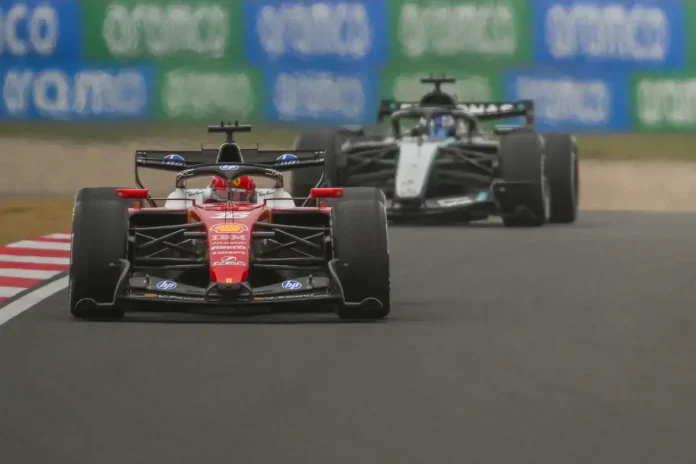
In a bold move that reverberates throughout the world of Formula 1, the FIA is set to implement a significant overhaul of engine testing regulations, targeting a critical loophole that has favored Mercedes for far too long. Starting June 1, the governing body will enforce new tests that promise to close the door on Mercedes’ notorious compression ratio advantage, but Ferrari remains skeptical that this change will be enough to level the playing field.
The competition for supremacy in Formula 1 has always been fierce, and the stakes have never been higher as the championship gears up for a new era with power units shifting in 2026. The internal combustion engine’s compression ratio has been adjusted from a staggering 18:1 to a more modest 16:1. This technical alteration is meant to curb the performance edge that has allowed Mercedes to dominate the circuit in recent years. However, the way the compression ratio is currently evaluated—at ambient temperature—has provided Mercedes with an ingenious loophole that they have exploited masterfully.
What does this mean for Ferrari? While the Italian team is hopeful that the new regulations could serve as a turning point, they are acutely aware that merely closing the loophole may not be sufficient to bridge the gap. Ferrari’s performance has been hampered by a series of missteps and inconsistencies, leaving them playing catch-up in a game defined by split-second decisions and razor-thin margins.
As the F1 community awaits the impact of these changes, the tension is palpable. Will Ferrari finally reclaim its status as a formidable contender, or will Mercedes find a way to adapt and maintain their edge? The clock is ticking, and the anticipation is building for what promises to be an electrifying season ahead.
The adjustments to the engine rules are a clear message from the FIA: the era of Mercedes’ unchecked dominance is coming to a close. Yet, Ferrari’s leadership is cautious, recognizing that the path to recovery is fraught with challenges. They are well aware that in the high-stakes world of F1, a few tweaks to regulations may not be enough to dismantle a well-oiled machine that has been operating at peak performance for years.
As the engines roar back to life, fans and analysts alike will be watching closely. The unfolding drama of the 2026 season is poised to be a riveting saga of innovation, strategy, and relentless pursuit of excellence. The question remains: can Ferrari rise to the occasion, or will Mercedes continue to dominate the racing landscape? Only time will tell, and the anticipation is mounting as the new rules loom on the horizon.