


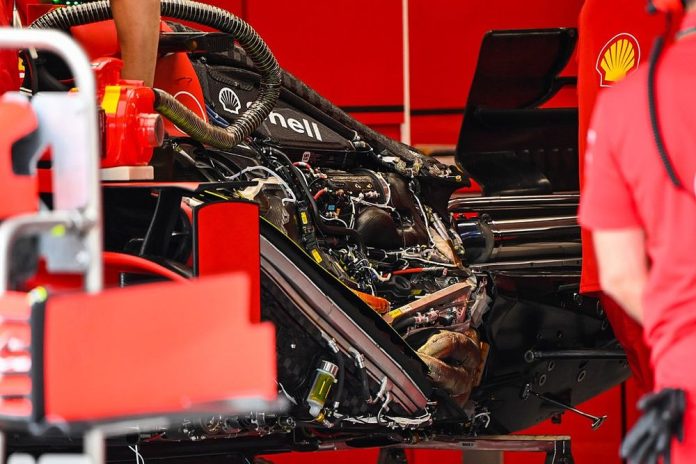
As the countdown to the 2026 Formula 1 season intensifies, it’s clear that the upcoming regulations overhaul will redefine the landscape of the sport. This isn’t merely a cosmetic change; it’s a seismic shift in how power units operate, fundamentally altering the dynamics of competition. With just over a month until the first private test at the Circuit de Barcelona-Catalunya, the atmosphere in the paddock is thick with anticipation and uncertainty. Teams are grappling with a multitude of unknowns, making every inch of insight invaluable.
At Ferrari’s recent end-of-season press gathering, Enrico Gualtieri, the technical director for the team’s power unit, provided a glimpse into the revolutionary changes on the horizon. As the Scuderia prepares to unveil its new car on January 23, the modifications to the power unit stand out as the cornerstone of the transformation that will unfold in 2026.
Two pivotal alterations are set to reshape the power units: a dramatic shift in power distribution and a complete overhaul of energy recovery systems. The most eye-catching change is the rebalancing of power output between the internal combustion engine and the electric components, each generating approximately 500 horsepower. This represents a significant evolution from the current 80-20 split towards a more balanced 50-50 ratio, with electric power output skyrocketing from 120 kW to an impressive 350 kW.
The second major development involves the elimination of the MGU-H, the motor generator connected to the turbo, leaving the MGU-K as the sole energy recovery source during braking and lift-off phases. This change not only simplifies the system but also amplifies the challenges engineers will face. The increase in electric power output means batteries will struggle to maintain energy delivery throughout an entire lap, especially on longer circuits. Consequently, drivers will find themselves managing energy more strategically than ever before, as the complexity of recharging the battery without the MGU-H looms large.
With these changes, Gualtieri does not foresee races devolving into “lift and coast” strategies. Instead, he emphasizes that the key to success will lie in advanced software management systems that dictate energy deployment and recovery. The teams that master this technology will carve out a competitive edge, balancing speed with energy conservation. The FIA’s introduction of active aerodynamics aims to level the playing field, but its success will hinge on seamless integration with electronic control strategies—an area where driver input will be crucial.
While the new regulations have been in place for over two years to prevent a repeat of previous dominance, teams remain in the dark about their relative positions. Early dyno testing has revealed reliability issues, primarily linked to the transition to 100% sustainable fuels. Teams, in their quest for optimization, are facing challenges that could impact their performance as they scramble to adapt to the new minimum car weight, which will drop significantly from 798 kg to 768 kg.
Amidst this backdrop, speculation about potential setbacks in Ferrari’s power unit development has surfaced following key personnel departures. Gualtieri has been tight-lipped on these matters, leaving fans and analysts alike pondering the implications of indecision regarding crucial materials and design choices.
As the season approaches, the stakes are higher than ever. Formula 1 is on the brink of an unprecedented technical evolution, one that will demand relentless adaptation and innovation. The real-world performance metrics will soon come to light, and as teams scramble to refine their designs, expect a fierce race not just for speed, but for the very survival of their power units. The race to 2026 is not just about winning; it’s about mastering a new era in motorsport history.