


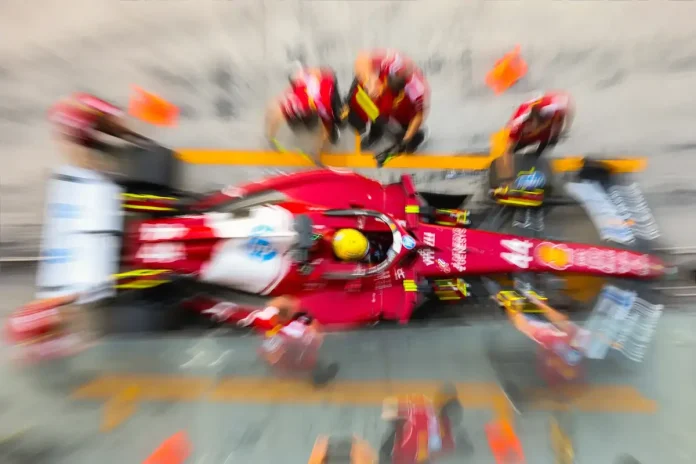
Ferrari’s team principal, Fred Vasseur, is sounding the alarm bells ahead of the monumental 2026 Formula 1 season, which promises to redefine the landscape of motorsport. With a seismic shift in regulations on the horizon, every team will be vying for a head start when the lights go out in Melbourne next March. However, Vasseur cautions that an early victory may not set the stage for ongoing success, as the complexities of the new rules pose significant challenges.
As Formula 1 gears up for its most radical overhaul in history, teams will be faced with an entirely new set of cars that are not only sleeker but also equipped with cutting-edge technology such as active aerodynamics and revised engines. The departure of DRS and the MGU-H has ushered in a new era where cars will utilize an innovative ‘Overtake Mode’ and ‘Boost Mode,’ designed to provide crucial power boosts during races. The engines will now operate on a 50/50 split between electric and combustion power, presenting teams with both opportunities and obstacles in their quest for supremacy.
While the allure of a triumphant start is undeniable, Vasseur emphasizes the importance of strategic thinking in this new environment. With a strict budget cap in place, teams cannot afford to recklessly throw resources at upgrades early in the season. “A key issue next season will be managing the budget cap,” Vasseur stated, highlighting the risks associated with rapid development. He elaborated that introducing multiple updates in the first few races could deplete a team’s development budget, resulting in dire consequences as the season progresses. “If a team starts introducing four or five updates… they’re burning through half their development budget at the start of the year,” he explained.
The stakes are high, and while a dominant performance in Melbourne may seem like a victory, Vasseur warns that this does not guarantee long-term success. He stated, “Whoever is ahead of everyone in Melbourne… won’t necessarily have the winning car of the year.” This insight underscores the unpredictable nature of the sport, where early leads can quickly evaporate under pressure from competitors who are keen to catch up.
Ferrari’s F1 2026 car, set to be unveiled on January 23, remains cloaked in mystery, and Vasseur admits that he is uncertain about the team’s standing as they embark on this new journey. The first glimpse into Ferrari’s performance will come during a private test at the Circuit de Barcelona later in January, but Vasseur is cautious. “I have no clue,” he confessed when asked about the team’s prospects, emphasizing that success in F1 is ultimately a comparison game. “If someone did a better job, I look stupid,” he added, reflecting the intense scrutiny faced by team leaders in this high-stakes environment.
As Ferrari prepares for the season ahead, the focus will be on balancing innovation with fiscal responsibility. The pressure is mounting, and the road to the 2026 championship is fraught with uncertainty, making every decision critical for the Scuderia. The countdown to the new era has begun, and fans around the world are left wondering: will Ferrari rise to the challenge, or will they falter under the weight of their ambitions?