


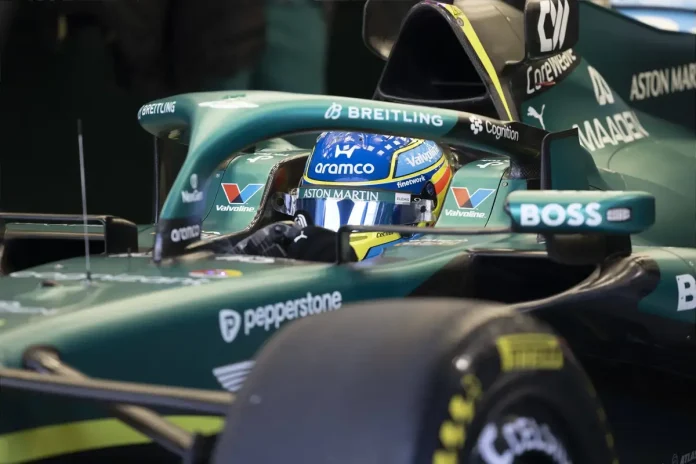
Aston Martin is facing a catastrophic pre-season testing phase for the 2026 Formula 1 season, igniting fierce speculation about the future of their partnership with Honda. As the team gears up for a transformative year marked by an extensive overhaul of chassis and power unit regulations, the collaboration with Honda has quickly turned into a nightmare. This is particularly crucial as it marks their first season as a Honda works partner, with the Japanese powerhouse supplying the new power unit for Adrian Newey’s inaugural Aston Martin F1 car.
Newey, who departed Red Bull in May 2024, took the reins at Aston Martin not only as their managing technical partner but also as the team principal. However, the much-anticipated debut has spiraled into chaos, with Aston Martin finishing pre-season testing with a dismal total of just 399 laps—the fewest of any team on the grid. The situation worsened dramatically when Honda disclosed a battery malfunction on the final day of testing in Bahrain, revealing that Aston Martin had to restrict their running to mere 30-minute intervals due to ongoing battery issues and a lack of power unit components.
This tumultuous start is likely causing Fernando Alonso to relive painful memories, reminiscent of his infamous struggles with Honda during his time at McLaren back in 2015. The once-great partnership, which had seen success with McLaren in the late ’80s and early ’90s, turned sour when they reunited, resulting in a series of catastrophic failures during testing. Alonso had famously likened Honda’s power unit to a GP2 engine, a remark that is now echoing ominously as he embarks on another challenging chapter with Honda.
Ralf Schumacher, a seasoned voice in the F1 community, weighed in on this precarious situation during a recent episode of the Sky Sports F1 Backstage Boxengasse Podcast. He emphasized that the root of the problem isn’t solely with the car, but also lies significantly within the Honda engine itself. Reflecting on Alonso’s history with Honda, Schumacher noted, “It’s a bit of deja vu for Fernando Alonso, who already experienced Honda’s early days at McLaren, which didn’t go well at all.” He pointed out the stark contrast in engine performance comparisons available to competitors like Ferrari and Mercedes, highlighting the challenges Aston Martin faces without such benchmarks.
The specter of Alonso’s previous harsh critiques looms large, with Schumacher suggesting that the damage done to the driver-Honda relationship may be beyond repair. “I don’t think you forget something like that, because it leaves its mark,” he stated, recalling his own experiences with Toyota and the cultural nuances that complicate such relationships. “What Fernando did back then was, of course, harsh criticism, but he was also a bit younger… But you don’t forget that in Japan.”
As the 2026 season approaches, the question remains: can Alonso and Honda mend fences, or is this a partnership doomed to repeat its past failures? Only time will tell if Aston Martin can turn this sinking ship around, or if they will be left adrift in the turbulent waters of Formula 1 competition, haunted by echoes of their past.