


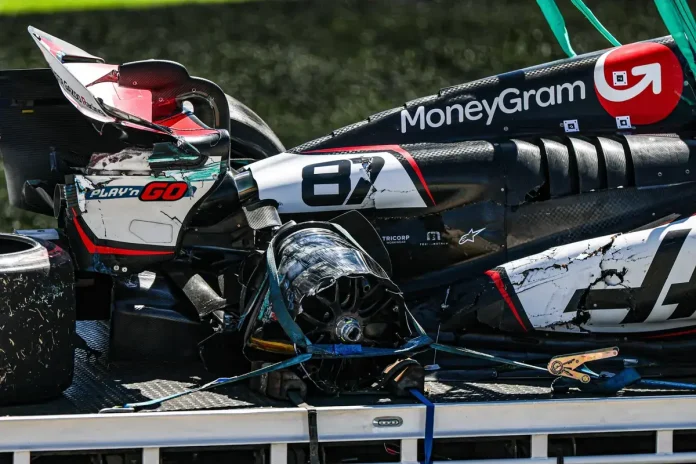
The recent terrifying crash involving Oliver Bearman at the Japanese Grand Prix in Suzuka has sent shockwaves through the Formula 1 community, exposing a glaring safety dilemma that the sport struggles to fix. Bearman was forced to veer into the escape road to avoid colliding with Franco Colapinto’s Alpine, which was crawling at a staggering 80 km/h slower due to energy recharge phases. This stark speed differential between cars in boost mode and those recharging has been a ticking time bomb, and now it’s detonated in full view of millions of fans worldwide.
Despite the urgency, any radical changes to the current regulations seem off the table in the short term. The FIA’s official statement acknowledged the problem, emphasizing a shared commitment to tweak energy management rules. Yet, the reality is harsh: the existing power unit setup has Formula 1 trapped in a regulatory straitjacket. The standard 50-50 split between thermal and electric power components defines the core issue. Shifting this balance or increasing fuel flow would trigger a cascade of technical overhauls—bigger fuel tanks, revamped cooling systems, and relocating components—all requiring years of development and testing, far beyond the immediate future.
Autosprint’s recent analysis underlines this deadlock. The only somewhat realistic path forward seems to be throttling back the electric power output to shorten recharge times and narrow the drastic speed gaps. However, this too is a double-edged sword: slower cars mean less spectacle, and the safety problem remains far from solved. A complete fix is elusive, and the sport is left grappling with compromises that neither fully satisfy safety advocates nor fans craving high-octane racing.
The interim solution? Expect minor regulatory tweaks and the introduction of more prominent rear wing lights to warn drivers of sudden speed changes ahead. These enhanced visual signals aim to give racers split-second awareness when a car in front abruptly decelerates, potentially preventing catastrophic pileups.
Ultimately, the burden rests heavily on the drivers themselves, who must now add another layer of vigilance to their already demanding mental calculus. Navigating the razor-thin margins between speed and safety, they face the daunting task of anticipating when a competitor might slow dramatically due to electric energy management. This precarious dance highlights a crucial truth: Formula 1’s technological evolution has outpaced its ability to guarantee driver safety in mixed-speed scenarios.
Liberty Media, with the drivers as the sport’s gladiators, cannot afford complacency. The spectacle must continue, but not at the expense of lives. The current crisis at Suzuka is a glaring warning, spotlighting that while innovation propels Formula 1 forward, it simultaneously exposes dangerous vulnerabilities. Until a comprehensive overhaul is possible, the sport must rely on incremental changes and heightened driver awareness to avoid disaster on the world’s fastest circuits.