


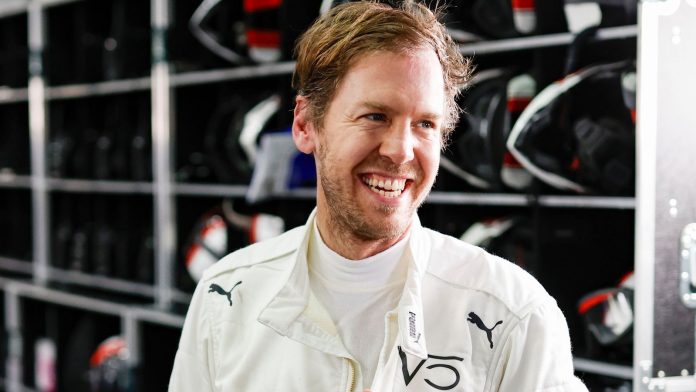
Sebastian Vettel, the four-time Formula 1 world champion, has opened up about a pivotal moment in his storied career, revealing the moment he knew he had crossed the threshold of his peak performance. The German driver rose to prominence as the prodigy of Red Bull Racing, dominating the sport from 2010 to 2013. However, his ambitious move to Ferrari in 2015 marked a turning point that ultimately led to a struggle to reclaim his former glory.
Reflecting on his journey during an insightful episode of the Beyond the Grid podcast, Vettel shared, “I came to Formula 1 in 2006, ‘07 and I would say already by 2010 – obviously I won the championship – I was sort of at my peak.” He elaborated that while he achieved remarkable success immediately after, he felt even more prepared to win in 2011, indicating that his prowess was undeniable during those early years. Yet, as he continued his career, he acknowledged a decline, stating, “And in fairness ’20, I was on my way down already.” This candid admission reveals the internal battles he faced as he navigated the complexities of competing against a new generation of drivers.
In the latter part of his Ferrari stint, Vettel found himself up against the rising star Charles Leclerc, who outperformed him in both 2019 and 2020. Leclerc’s exuberance for racing was palpable, and Vettel noted, “Charles had so much energy.” While Vettel had basked in the glory of four championships, he admitted that witnessing Leclerc’s youthful enthusiasm made him realize the shifting dynamics of competition. The stark contrast between their approaches to racing was evident, with Leclerc celebrating finishes that Vettel had grown accustomed to dominating. “I think that’s when I started to struggle a bit,” he confessed, highlighting the psychological pressures that accompanied his transition into the role of a more seasoned competitor.
The challenges of 2020, a year marred by the COVID-19 pandemic, provided a unique pause for Vettel. He described the unexpected break as a refreshing experience that allowed him to reconnect with his family and reflect on his life beyond racing. This period of introspection led him to confront broader societal issues that have since become his new passion. “At the same time [I was] becoming aware with the kids growing of problems in the world,” he explained, indicating a shift in focus from the racetrack to pressing global matters.
Since retiring, Vettel has channeled his energy into advocating for the environment and promoting inclusivity within motorsport through initiatives like Race 4 Women. He has also drawn attention to critical environmental concerns, particularly the plight of indigenous communities facing destruction in places like the Amazon rainforest. His newfound mission reflects a deeper understanding of his place in the world and highlights the importance of activism in today’s society.
Vettel’s journey is a testament to the complexities of professional sports, where even the greatest athletes grapple with doubts and insecurities. “I was speaking to Michael [Schumacher] about this many years ago and even he had it,” Vettel revealed, demonstrating that the pressures of performance are a universal experience among elite drivers. The acknowledgment of insecurity, even among the legends, adds a layer of humanity to the competitive facade of Formula 1.
As Vettel continues to explore his post-racing identity, his insights provide a fascinating glimpse into the life of a champion grappling with the inevitable passage of time and the evolution of his priorities. The lessons learned from his illustrious career will undoubtedly resonate with fans and aspiring athletes alike, as they reflect the journey of a once-dominant force in motorsport who is now carving a new path in the world beyond the racetrack.