


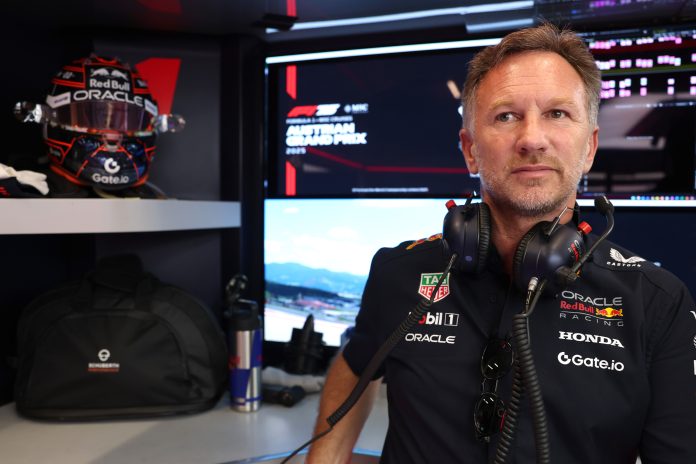
Christian Horner’s name continues to resonate throughout the world of Formula 1, even in his absence. Since his departure from Red Bull, the 52-year-old has traded the hustle of the paddock for the tranquility of Oxfordshire, where he’s been spotted riding horses and staying in touch with reigning champion Max Verstappen. However, the buzz surrounding a potential return has ignited fresh speculation, particularly with reports suggesting that Horner is in discussions with Alpine for a return in 2026, possibly through a stake purchase.
The mere thought of Horner stepping back into the F1 arena has fans and pundits alike on the edge of their seats. Alpine, a team currently grappling with a dismal performance last season, finishing at the bottom of the standings, is in desperate need of a transformative leader. With a storied career that boasts two decades of experience, eight drivers’ titles, and six constructors’ championships, Horner’s expertise could be the lifeline Alpine requires. The team’s struggles, highlighted by drivers Pierre Gasly and Franco Colapinto battling for 19th place, underscore the urgency for a strategic overhaul.
While it’s unrealistic to expect immediate miracles, Horner’s proven track record suggests he could effectively place the right talent in key positions, potentially revolutionizing Alpine’s fortunes. However, the dynamics within the team could prove complex. A reunion with Gasly, who was unceremoniously ousted from Red Bull after just half a season in 2019, raises eyebrows. Though Gasly diplomatically remarked that “that chapter is closed” when asked about his past with Red Bull, the prospect of working alongside the man who dropped him could create a palpable tension.
For Gasly, any lingering resentment will need to take a backseat if Horner’s leadership is the key to unlocking Alpine’s potential. The reality is that if the team begins to show progress, old grievances might evaporate just as quickly. Nevertheless, these discussions remain speculative at this point. No contracts have been signed, and Horner hasn’t yet made any drastic financial moves to secure a stake in Alpine.
Gasly, for his part, exudes confidence in the current Alpine setup, asserting that the team has some of the best technical minds in the industry. He stated, “I say this with full transparency and honesty: we must have some of the best technical staff on the grid, looking at people’s experience, skill sets… I don’t think we’ve ever been in a situation with so many great engineers, mechanics and staff back in Enstone.” His optimism highlights a belief that the team can turn things around without the need for Horner’s involvement.
As the F1 world holds its breath, the question remains: will Horner return to the sport that has defined his career? The possibility of fireworks is tantalizing, but so is the uncertainty of whether this partnership will come to fruition. One thing is clear: Christian Horner’s F1 story is far from over, and the motorsport community is eager to see how this narrative unfolds.