


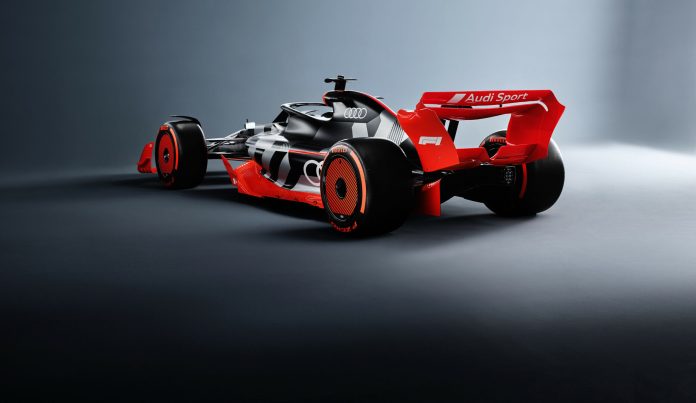
The racing world is on the brink of a revolutionary transformation as Audi steps into the limelight with its groundbreaking Formula 1 power unit, a powerhouse engineered to redefine the sport. With a staggering output of approximately 750 kW, this cutting-edge unit is meticulously developed and manufactured in Neuburg an der Donau, Germany, setting the stage for a new era in motorsport innovation.
At the heart of this formidable power unit are three essential components that work in unison to deliver unparalleled performance. First and foremost is the Internal Combustion Engine (ICE), a sophisticated 1.6-liter turbo engine generating around 400 kW. This engine is not just about raw power; it operates on sustainable fuel, achieving a maximum energy output of 3,000 MJ/h, showcasing Audi’s commitment to environmental stewardship.
Complementing the ICE is the Energy Recovery System (ERS), an ingenious assembly that includes energy storage, an electronic control unit, and a Motor Generator Unit-Kinetic (MGU-K). This component, with its peak power of 350 kW, is responsible for harnessing kinetic energy during braking, which is crucial for enhancing overall efficiency and performance on the track.
The final piece of the puzzle is the Gearbox (GBX), an advanced eight-speed transmission system designed for seamless gear changes without interrupting torque delivery, ensuring that drivers maintain optimum control and power at all times.
Looking ahead to 2026, the Formula 1 landscape is poised for further evolution. The introduction of a new 1.6-liter turbo V6 engine will maintain the hybrid concept while significantly increasing the electric power output from 120 kW to a staggering 350 kW within the MGU-K. This tripling of available energy will balance the scales between electric and thermal components, bringing electrification to the forefront of racing.
Moreover, the removal of the MGU-H component aims to simplify the technology and reduce costs, paving the way for a more accessible and competitive racing environment. The energy distribution will achieve an impressive equilibrium, with about 50% of the total power coming from electricity and the other half generated by the combustion engine.
Audi’s commitment to sustainability is further exemplified by its focus on regenerative energy during braking, with improvements doubling the energy recovery to 8.5 MJ per lap. All single-seater cars will utilize 100% sustainable fuel, incorporating not only ethanol but also synthetic fuels, ensuring a carbon-neutral approach to racing.
As Formula 1 leads the charge in this environmental initiative, the series aims to implement this groundbreaking technology in conventional automobiles, aligning with the ambitious goal of achieving climate neutrality by 2030. This bold move not only positions Audi as a pioneer in the sport but also underscores the critical intersection of motorsport and sustainability, captivating fans and stakeholders alike. The future of racing is not just fast; it’s also green, and Audi is at the forefront of this exhilarating journey.