


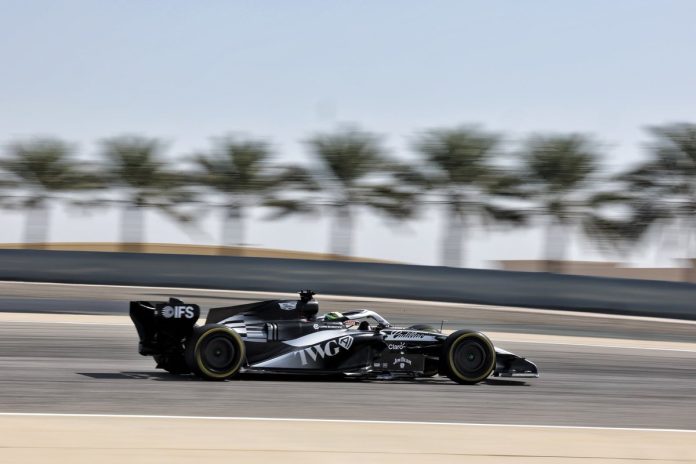
In a daring plunge into the high-octane world of Formula 1, Cadillac has unveiled a jaw-dropping asymmetrical livery for its debut season. This striking design is nothing short of eye-catching, yet it carries a weighty legacy fraught with peril. History has shown that venturing into the realm of unconventional aesthetics can lead to disastrous outcomes, particularly for American teams stepping onto this global stage for the first time. The ominous echoes of British American Racing’s infamous entry in the late 1990s linger, painting a cautionary tale that Cadillac must heed.
Let’s rewind to 1999, when British American Racing, buoyed by the financial might of British American Tobacco, stormed into F1 with grand ambitions. Team principal Craig Pollock, alongside the legendary Jacques Villeneuve, strived to challenge the likes of McLaren and Ferrari, boasting an impressive lineup that seemed destined for greatness. Yet, the harsh truth of F1 is that bold proclamations often crumble under the weight of reality. Their debut car, the BAR 01, quickly became a spectacle—not just for its performance, but for its bizarre split-livery design that left fans and critics alike in disbelief.
On January 6, 1999, BAR unveiled not one, but two strikingly different cars. Villeneuve’s sleek machine donned the colors of Lucky Strike, while teammate Ricardo Zonta’s was painted in the vibrant hues of 555. The intention was to dazzle at the Australian Grand Prix with this marketing coup. However, the FIA had other plans, enforcing regulations that mandated near-identical liveries for both cars. In a fit of creativity—or desperation—BAR concocted a design that divided the car down the middle, featuring a ‘zip’ graphic that separated the two halves. The mechanics even donned half-and-half overalls, while the drivers clung to their original suits. The result? A visual marvel, but a total disaster in execution.
As the season kicked off, the ambitious statements about potential podiums quickly turned into haunting reminders of overconfidence. The Australian Grand Prix was a catastrophic start, with Villeneuve qualifying a disheartening 11th and Zonta trailing far behind. The race was a nightmare; mechanical failures plagued both drivers, leaving them stranded in the depths of embarrassment. Villeneuve faced 11 consecutive retirements, and it wasn’t until the 12th race that he finally crossed the finish line—far from glory in 15th place. The team ended its inaugural season without a single point, languishing at the very bottom of the constructors’ championship rankings.
The fallout from such expectations was swift and brutal. Recognizing the folly of their ways, BAR pivoted in 2000, abandoning the split livery for a more streamlined, cohesive design. The results were immediate and encouraging, with both drivers scoring points right out of the gate. The simplified look resonated with fans and became synonymous with the team’s identity, allowing it to salvage its reputation over the years. Despite never clinching a grand prix victory, BAR transformed into Honda and later Brawn GP, ultimately contributing to the rise of the powerhouse Mercedes team we see dominating today.
Cadillac’s foray into F1 is marked by a striking resemblance to this tumultuous history. An American debut, an audacious asymmetrical design, and a hefty expectation to deliver. The ghosts of BAR serve as a stark reminder that while creative concepts can carve out a unique identity, they must not overshadow the critical need for reliability and performance. As Cadillac embarks on this ambitious journey, the specter of past failures looms large, urging caution and grounding as they seek to find their footing in one of motorsport’s most unforgiving arenas. Will they soar to new heights with innovation, or will they find themselves in a cautionary tale of their own? Only time will tell, but the stakes couldn’t be higher.