


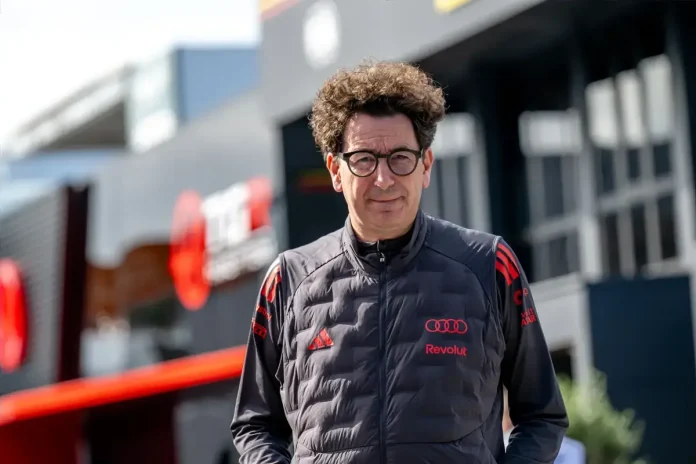
In a surprising turn of events for Formula 1, Audi's boss, Mattia Binotto, has signaled a potential shift back to the beloved V8 engines, stirring a blend of nostalgia and speculation about the sport's future direction. This revelation comes amid ongoing discussions about the engine regulations and a proposed “push-to-pass” system, reminiscent of IndyCar's overtaking strategy, which could redefine how races are contested on the track.
The emotional weight of this news cannot be understated. For fans who have longed for the thunderous roar of V8 engines since their departure after the 2013 season, this announcement rekindles memories of exhilarating duels and high-speed battles that characterized an era of racing now seen as classic. However, the implications stretch beyond sentimentality; they touch upon the very essence of competition in F1.
Chronologically, the evolution of F1 engines has been marked by significant changes. The sport transitioned from the V8 to the V6 turbo-hybrid engines in 2014, with a major revision set for 2026 that aims to balance internal combustion engine (ICE) power with electric propulsion. Yet, barely a year into this new chapter, conversations are already pivoting back to the V8 format, with Audi's interest raising eyebrows and prompting critical discussions among teams and the FIA.
Binotto has made it clear that the discussions around this potential return are ongoing. He pointed out that while the framework for the new engine regulations needs to be finalized by the end of the year, the shift to V8s could occur no sooner than 2030. This timeline is crucial, as it allows manufacturers like Audi to make informed decisions regarding their investments and strategies. With the substantial cost of developing current power units, the push for a simpler yet effective engine format could lead to significant financial relief for teams.
Beyond the technical aspects, the human dimension of this transition is paramount. For drivers, teams, and fans alike, the prospect of V8s brings a mix of excitement and anxiety. Drivers face the constant pressure of pushing the limits of their machines, and with a new engine formula potentially altering aerodynamic balances and handling characteristics, the stakes will rise even higher. Families of racers, who live through the triumphs and tribulations of their loved ones on the track, will also feel the impact as the sport navigates its next evolution.
Moreover, the potential changes raise questions about the sport's identity and its commitment to sustainability. Audi's initial entry into F1 was anchored in a vision that combined high-performance racing with a focus on sustainable technology. The integration of hybrid elements within a V8 framework will require a careful balance to maintain F1's reputation as a leader in automotive innovation while satisfying fan desires for traditional racing sounds and experiences.
In conclusion, as Formula 1 stands at this crossroads, the implications of returning to V8 engines extend far beyond engine noise and performance metrics. They touch upon the core of competitive racing, the financial viability for teams, the emotional rollercoaster for fans, and the sport's commitment to innovation. The road ahead is uncertain, but one thing is clear: the conversations happening now will shape the future of F1, redefining what it means to race in the premier class of motorsport.