


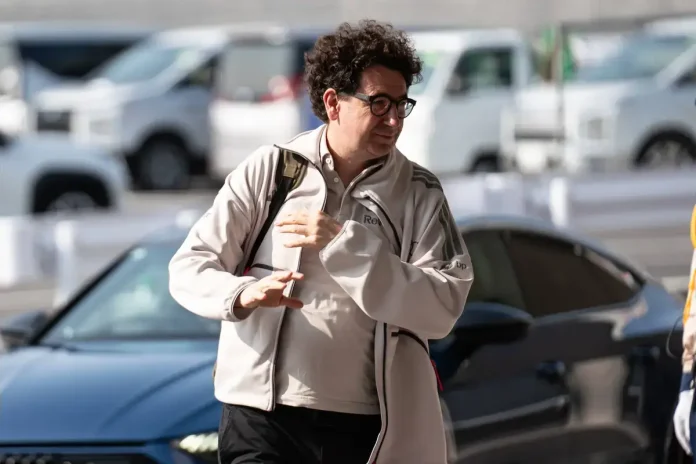
Audi’s Formula 1 project is entering a new era under the undisputed control of Mattia Binotto, as the former Ferrari team principal steps up to fill the void left by Jonathan Wheatley’s unexpected resignation. The Swiss-Italian engineer is now the central figure steering Audi’s F1 ambitions, but the path ahead is fraught with challenges and questions about how the team will manage the intense demands of the racing calendar.
The break in the racing schedule during April, caused by the cancellations of the Bahrain and Saudi Arabian Grands Prix amid escalating conflict in the Gulf region, has provided Audi with a crucial breather. This pause comes at a turbulent time, as the Hinwil-based outfit deals with the fallout from Wheatley’s controversial departure. Officially, Wheatley stepped down for personal reasons, but insiders suggest deep-rooted tensions with Binotto may have played a role. Binotto himself has dismissed these rumors, insisting Wheatley “was well integrated” within the team.
Now, the burning issue is how Audi plans to maintain stability and performance without a traditional team principal leading the charge on race weekends. Initial speculation pointed to Audi hunting for a fresh face to take the helm, but those ideas appear to have been shelved. Binotto has made it clear he intends to retain direct control over the team’s operations, a move reminiscent of his final years at Ferrari when he sought to shape the squad entirely under his vision—often clashing with other key figures.
Binotto’s dominance is absolute, but he acknowledges the practical need for support during the hectic race weekends. While he will remain the team principal in name and authority, the 56-year-old admits he cannot physically be present at every Grand Prix. His primary focus is on transforming Audi’s factory operations—an enormous task involving more than just development but a complete overhaul to ensure the team’s competitiveness. He openly states, “For the future, I think we are not looking for a new team principal. I will keep the role, but I will need someone to support me during race weekends because I cannot always be there in person.”
One name already circulating as a potential deputy is Allan McNish, the former driver and long-time Audi loyalist who was among the first to be involved in the company’s F1 project when it was launched four years ago. McNish’s deep experience and history with Audi make him a promising candidate to be Binotto’s right hand on the track, handling the tactical and operational demands while Binotto drives the strategic transformation from the factory floor.
Audi’s F1 future now hinges on this concentrated power structure led by Binotto, who must balance hands-on leadership with delegation to keep the team competitive amid intense pressure. The real test will be whether this approach can deliver the results Audi craves without the traditional team principal structure. As the season unfolds, all eyes will be on Binotto and his chosen support to see if this bold gamble pays off or if the internal tensions that felled Wheatley will resurface under a single man’s reign.