


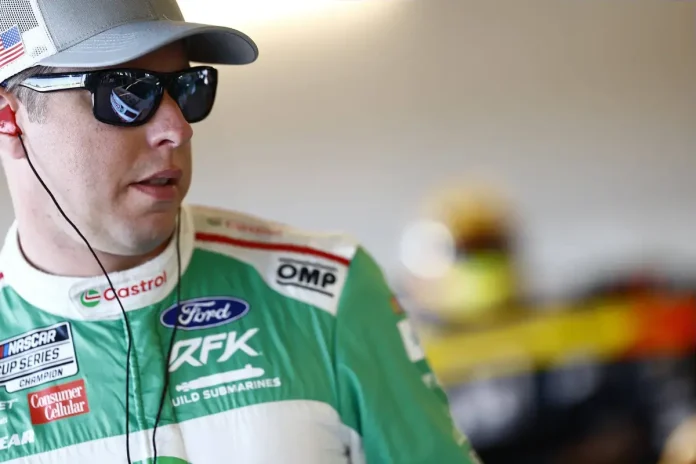
In a startling turn of events, NASCAR star Brad Keselowski was recently spotted in a hospital gown, seated in a wheelchair, sending shockwaves through the racing community and leaving fans breathless with concern. Fortunately, the situation stemmed from a skiing accident, and his team has reassured everyone that he is on track to recover in time for the Daytona 500. However, this incident has ignited a fiery debate about the off-track safety of athletes, as voiced by NASCAR veteran Kenny Wallace.
Taking to his popular segment “Coffee With Kenny,” Wallace candidly expressed his shock over Keselowski’s injury while reflecting on the tragic passing of fellow driver Greg Biffle in a recent crash. The emotional weight of these events prompted Wallace to delve deeper into the implications of athletes engaging in high-risk activities outside their professional obligations. He highlighted how Keselowski’s leg injury is not an isolated case, recalling similar misfortunes involving other prominent drivers like Chase Elliott, who suffered a leg break while snowboarding, and Alex Bowman, who sustained a back injury, also this year.
Wallace’s message is clear: while the thrill-seeking nature of athletes is inherent, there must be a critical reevaluation of their extracurricular choices. “I’m not gonna say do you stop skiing, do you stop doing extra-curricular activities. What I am gonna say is, do you try really hard to limit your dangerous activities?” he questioned, underscoring the need for athletes to prioritize their professional responsibilities over risky pastimes.
He further emphasized the ripple effects of an athlete’s decisions on their teams. Wallace pointed out that behind every driver, there are not just crew members but families who depend on these athletes for their livelihoods. The stakes are high, and the consequences of risky behaviors extend beyond personal injuries; they can impact the entire ecosystem that supports the sport. “When I see these race teams being run, I see that there’s a lot of people being paid. And they’re counting on Chase Elliott, and then you’re looking at Brad Keselowski,” he noted, illustrating the collective responsibility that comes with being a professional athlete.
The crux of Wallace’s argument is a poignant question directed at fans and fellow athletes alike: “Brad Keselowski broke his leg. Should he have been more careful since he’s the leader of his pack?” This inquiry resonated deeply with the NASCAR community, especially in light of Biffle’s recent tragedy, stirring a wave of thoughtful responses from fans who chimed in with their perspectives.
One fan encapsulated the sentiment perfectly, reflecting on the fragility of life: “Simply, do the things that you want to do. Start or do them today. Don’t wait. Stop putting them off. Build a legacy of memories with those you care about.” Such comments revealed a mix of admiration for athletes’ daring spirits while also raising concerns about the risks they take.
Yet, another voice in the discussion brought a more analytical perspective, pointing out the inherent conflict between risk and reward. “You drivers are active/aggressive by nature. It’s a fine line on risk-taking,” they noted, suggesting that a cost-benefit analysis might discourage risky pursuits. The debate continues: Should athletes, who have teams and families relying on them, adopt a more cautious approach to their off-track activities, or should they retain the freedom to explore their passions, even at the risk of injury?
As the NASCAR community grapples with these pressing questions, one thing remains certain: the intersection of personal choices and professional responsibilities is a delicate balance that every athlete must navigate. The hope is that this conversation will lead to greater awareness and perhaps a shift in how drivers manage their off-track lives, ensuring that they can continue to thrill fans both on and off the track without compromising their safety or that of those who depend on them.