


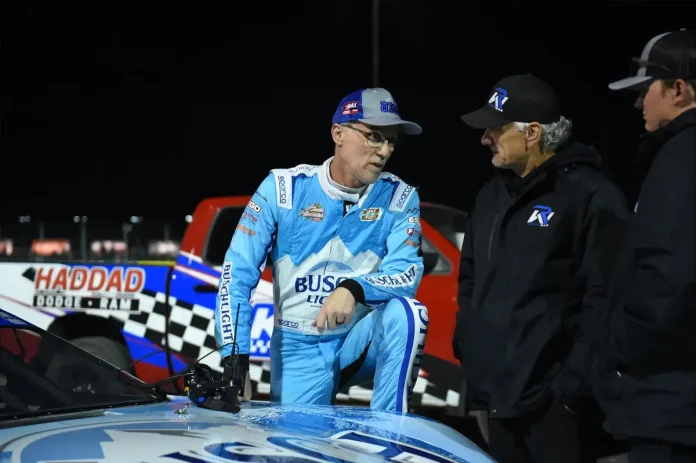
In a thrilling showdown at Phoenix Raceway, the adrenaline-fueled action exposed both the potential and pitfalls of a horsepower boost that has left fans and drivers alike buzzing with excitement. Veteran driver Kevin Harvick, ever the strategist, is calling on NASCAR to seize the moment and crank up the horsepower even further before the 2027 season, arguing that the competition could soar to new heights with an additional power surge.
“Imagine if it were 200,” Harvick exclaimed during his Happy Hour podcast, highlighting the stark difference between the current horsepower levels and what could be achieved. His voice resonates with those who remember the raw power of racing in earlier eras, where greater horsepower meant not just speed, but an exhilarating battle for supremacy on the track. Harvick believes the thrilling competitiveness displayed at Phoenix is merely a hint of what’s possible if NASCAR embraces more engine power.
However, the increased horsepower isn’t without its complications. While the added power enlivened the race, it also introduced significant challenges that left teams scrambling. The scorching asphalt combined with the heightened engine output led to a troubling trend: tires were succumbing to wear and tear at an alarming rate. This created a nail-biting scenario where strategic decisions became more complex than ever, with drivers forced to navigate the treacherous balance between speed and tire management.
As the NASCAR circuit heads to Darlington, Harvick predicts that teams will face similar hurdles. “I think it could put the crews in a really curious spot as to when you put tires on and when you don’t with the tire allotment that they have,” he noted, emphasizing the critical importance of tire strategy in the upcoming race. With Darlington also classified as a short track, the competition will again feature the high-octane 750hp V8s, raising the stakes even higher.
Zane Smith, another driver preparing for the challenge at Darlington, voiced his apprehensions about the upcoming race conditions. Goodyear’s tire package will mirror that of Las Vegas, but with adjustments to aerodynamics that could drastically alter the race dynamic. Smith has been running simulations to prepare, but he’s wary of the potential impact of rising temperatures on tire performance. “If it’s gonna be a hot day in Darlington, it’s gonna be a solid day’s work,” he warned, highlighting the daunting task ahead as drivers gear up for what promises to be another gripping race.
With the East Coast weather forecast indicating an increase in temperatures leading into race day, the pressure is on for teams to adapt. The asphalt will be blistering, and the combination of high horsepower and intense heat could lead to a chaotic race scenario. Harvick may relish the prospect of more horsepower, but the real question remains: will teams have the strategy and skill to manage the challenges that come with it? As the engines roar and the tension rises, one thing is clear: the race at Darlington is shaping up to be an unforgettable spectacle.