


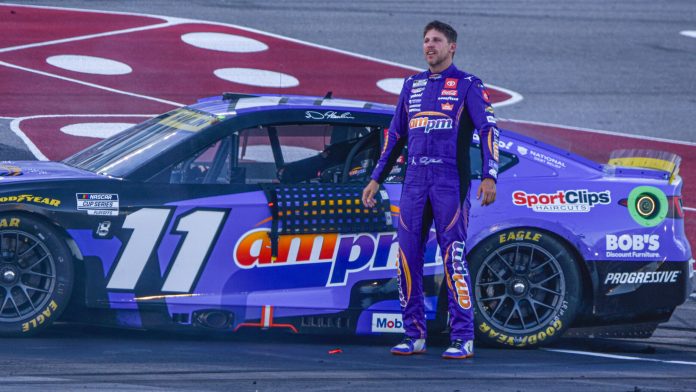
The landscape of NASCAR is rapidly evolving, and at the heart of this transformation are the Next-Gen regulations that have ignited passionate discussions among fans and insiders alike. As the series contemplates a shift towards electric vehicles, the excitement is palpable, yet so is the apprehension surrounding this monumental change. Denny Hamlin, a prominent figure in the racing world, has stepped forward to unveil the reasons behind fans’ hesitance to embrace an electric future for NASCAR.
For years, NASCAR has been synonymous with roaring engines and the visceral thrill of high-speed racing. The very essence of the sport is deeply rooted in its loud, powerful vehicles that command attention on and off the track. Hamlin’s insights shed light on a critical concern: many fans fear that the switch to electric cars could strip away the traditional allure that has drawn them to NASCAR in the first place.
According to Hamlin, the sentiment among fans is clear. They cherish the authenticity and raw energy that come from powerful combustion engines. The sound, the speed, and the adrenaline rush are integral to the NASCAR experience, and the prospect of silent electric vehicles is understandably daunting for those who thrive on the intensity of the sport. “If you go to a race, you want that sound,” he stated, emphasizing the emotional connection fans have with the roaring engines that have defined NASCAR for decades.
Moreover, there is a palpable concern about the identity of NASCAR itself. Would the sport remain the same if it transitioned to electric? Would the fundamental elements that have captivated generations of racing enthusiasts be lost in translation? Hamlin’s comments echo a broader debate within the racing community, one that questions the balance between innovation and tradition.
The stakes are enormous. NASCAR is at a crossroads, facing pressure to modernize and align with global trends towards sustainability. While the move towards electric vehicles may appeal to a younger, environmentally conscious demographic, it risks alienating the loyal fan base that has supported the sport through thick and thin. Hamlin’s candid remarks serve as a wake-up call to the governing bodies of NASCAR, reminding them that any drastic changes must consider the voices of the fans who have fueled the sport’s legacy.
As discussions about electric racing continue to unfold, the tension between progress and preservation remains a hot-button issue. Fans are left wondering: can NASCAR successfully navigate this pivotal moment without sacrificing the very essence of what makes racing so exhilarating? Only time will tell if the roar of electric engines can ever rival the thunderous symphony of internal combustion that has thrilled audiences for generations. The future of NASCAR hangs in the balance, and with it, the hopes and fears of millions of dedicated fans.