


The NASCAR antitrust lawsuit has pulled back the curtain on a troubling reality that has left teams, particularly those in the lower series, grappling with financial instability. Recent comments from Tommy Joe Martins, a prominent figure in the NASCAR Xfinity and Truck series, have sparked a firestorm of discussion regarding the viability of racing teams like Dale Earnhardt Jr.’s JR Motorsports. Martins’s blunt assessment reveals a harsh truth: despite achieving remarkable success on the track, teams are losing money at an alarming rate, thanks to a flawed financial model that threatens to undermine the sport’s very foundation.
Martins delivered a staggering admission during a candid conversation on Chase Holden’s YouTube channel, stating, “The joke with Junior Motorsports is like they could go out and win every race, and they basically did. They won 20 races. I guarantee you they lost money. It just doesn’t pay enough money.” This statement encapsulates the paradox facing successful teams in the Xfinity Series, where victories do not equate to financial success.
In a season that saw Connor Zilisch and his teammates dominate the competition, clinching 10 out of 17 wins and securing places in the championship finale at Phoenix, the reality remains dire. The financial model that governs the lower tiers of NASCAR is fundamentally flawed, leaving independent teams like JR Motorsports to rely heavily on sponsorship and external funding. The meager prize money from races simply does not cover the exorbitant costs associated with running a competitive team, which include travel, equipment, salaries, and essential parts.
Unlike the Cup Series, which benefits from a charter system ensuring guaranteed revenue and performance bonuses, teams in the Xfinity Series are left to fend for themselves. The absence of charters means that payouts are unpredictable and often insufficient, placing teams in a precarious financial position. For instance, while the total purse for the 2025 Xfinity Series championship is approximately $2.15 million, the Cup Series finale boasts a staggering purse of over $12 million, illustrating the vast financial chasm that exists between the two tiers.
Martins expressed his disappointment in the current state of the sport, lamenting that the opportunities that once made NASCAR appealing are being overshadowed by financial strain. “I think the sport that I fell in love with was one that felt like it was able to give people opportunities. And now, as a team owner, you spend all this money going through it. The reason that I’m not driving anymore as a race car driver is because it is a fundraising proposition,” he revealed.
The restructuring of payout systems has further exacerbated the situation, with NASCAR flattening the prize distribution so that full-time Xfinity teams receive the same base payout regardless of the race venue. This means that even high-profile events do not guarantee increased earnings, compelling teams to lean heavily on sponsorship for survival—often accounting for 60 to 80% of their total income. Primary sponsorships typically range from $150,000 to $400,000 per race, translating to millions over a season, yet this dependency leaves teams vulnerable.
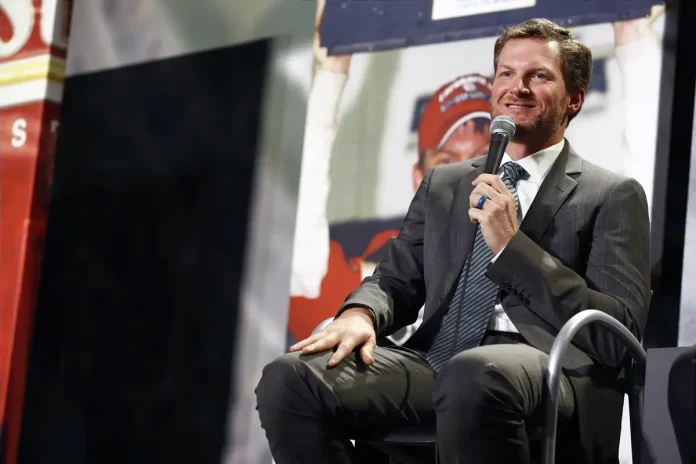
Dale Earnhardt Jr. is acutely aware of these challenges, particularly as the charter system’s permanence looms. He has voiced his concerns about the implications of turning charters into permanent assets, fearing it could lock out aspiring teams and create a closed league model that raises financial barriers to entry. “They’re no longer charters. They go from franchises worth around $25 million to charters worth about $150 million or more,” he cautioned, highlighting the growing divide between top-tier teams and those striving to ascend from the lower ranks.
As the dust settles from recent developments, the implications for Dale Jr.’s ambitions to transition JR Motorsports to the Cup Series look bleak. The imminent shift toward a more exclusive, franchise-like structure threatens to stifle competition and limit opportunities for teams like his. With the dream of Cup Series glory slipping away, Dale Jr. now turns his focus toward a strong performance in the upcoming Xfinity season, hoping to navigate the treacherous financial landscape of NASCAR while maintaining the spirit of competition that once defined the sport.