


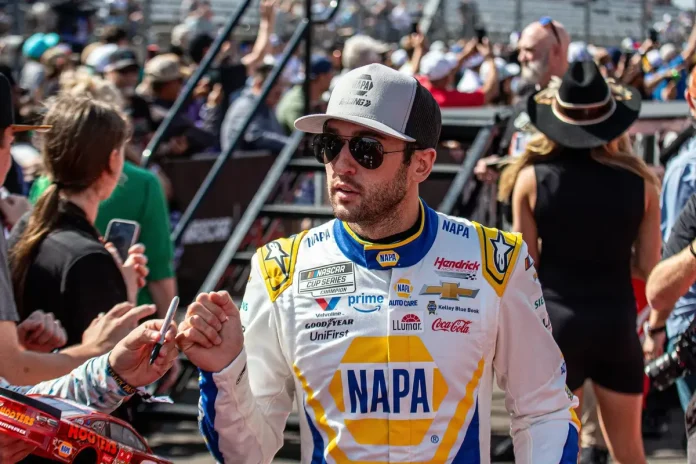
Chase Elliott, long hailed as the face of NASCAR and its most beloved driver, is facing an unexpected challenge to his popularity. For nearly ten years, Elliott has basked in the glory of being voted the Most Popular Driver, a title he defended vigorously year after year. However, the winds of change are blowing, and 2025 has unveiled a startling narrative that could reshape the landscape of fan loyalty in the sport.
While Elliott continues to dominate fan voting, the marketplace is singing a different tune. The die-cast sales figures released by Lionel Racing tell a compelling story: Justin Allgaier’s Traveller Whiskey Chevrolet is the unexpected champion of the sales charts, clinching the title of best-selling die-cast for 2025. This isn’t just a sales win; it’s a monumental shift that reverberates through the hearts of fans and collectors alike. Allgaier’s achievement is rooted in a historic moment—his contribution to Dale Earnhardt Jr.’s team making its inaugural NASCAR Cup Series entry at the prestigious Daytona 500.
This vehicle is more than just a collectible; it embodies a nostalgic journey as JR Motorsports embarks on a new chapter, blending the past with exciting future possibilities. The rush of collectors to grab this piece of history signifies the emotional connection that transcends mere popularity.
Dale Earnhardt Jr. himself made waves by securing the second spot on the die-cast list with his Budweiser Speedway Classic Late Model Chevrolet. This outcome serves as a powerful reminder that the legacy of legends can endure beyond retirement. Even years after hanging up his helmet, Junior’s allure remains potent, demonstrating that some icons never truly fade away—they simply evolve.
In contrast, Chase Elliott’s placement on the die-cast list, landing him in fourth position, raises eyebrows. Despite being crowned the Most Popular Driver for the eighth consecutive year, this ranking marks a notable dip for him. While he continues to win the fan vote, the purchasing behavior suggests a deeper narrative, one where nostalgia, emotional ties, and milestone achievements can overshadow conventional popularity.
Howard Hitchcock, the CEO of Lionel Racing, encapsulated this sentiment perfectly, stating, “Each die-cast tells a story of triumph and tradition, and we’re proud to bring these moments to fans and collectors everywhere.” The connection fans have to these vehicles goes beyond mere merchandise; they represent cherished memories etched in the fabric of NASCAR history.
The spotlight on Dale Earnhardt Jr. doesn’t end there. In a surprising turn of events, Junior expressed his shock over NASCAR’s perception of the Superstar Racing Experience (SRX) as a serious threat. During an episode of The Dale Jr. Download podcast, he revealed his disbelief at the internal concerns raised by NASCAR executives regarding SRX, which was designed not to rival NASCAR but to celebrate the sport’s rich history.
Junior elaborated on the roots of SRX, explaining that co-founder Ray Evernham envisioned a nostalgic series that brought together retired drivers and unique personalities to engage local markets. Yet, despite his involvement, Junior admitted he wasn’t particularly invested in the project. “I wasn’t a fan; I didn’t really watch too much of it,” he said candidly, acknowledging the limitations of his bandwidth.
The revelation that NASCAR viewed SRX as a potential competitive threat left him perplexed. “To hear that they were even remotely the least bit threatened is so surprising to me,” he said, reflecting on the stark contrast between NASCAR’s stature and SRX’s modest beginnings.
As Dale Earnhardt Jr. navigates these revelations, it’s clear that the dynamics of NASCAR are shifting. The interplay of legacy, nostalgia, and evolving fan expectations paints a complex picture of the sport’s future. As we dive deeper into this new era, one thing remains certain: the stories behind the cars and the drivers continue to captivate fans, igniting passion and loyalty that transcends the scoreboard.